
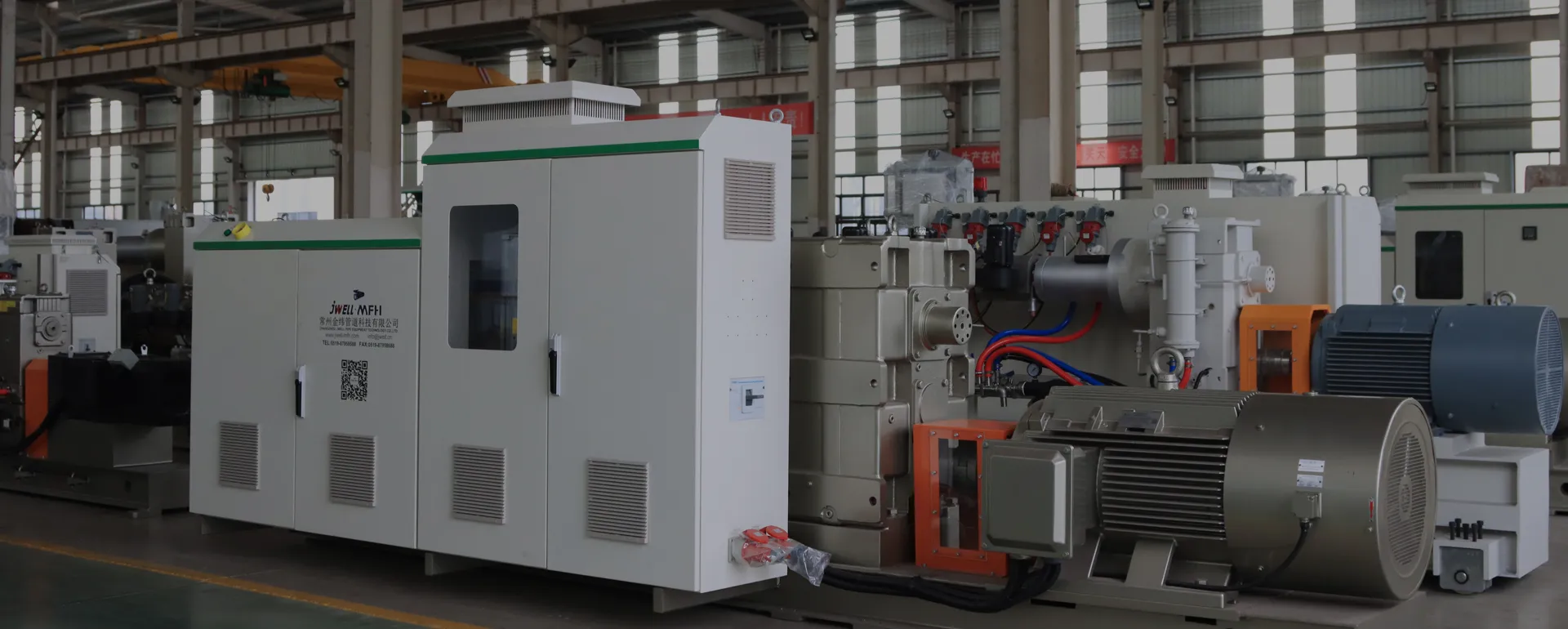
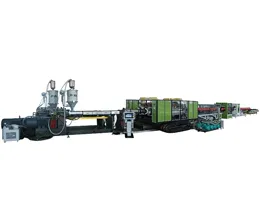
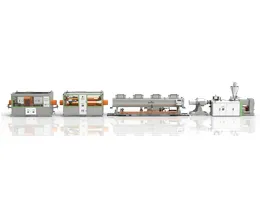
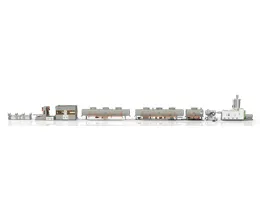
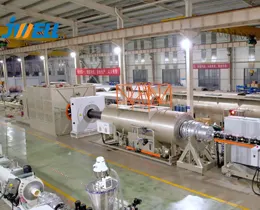

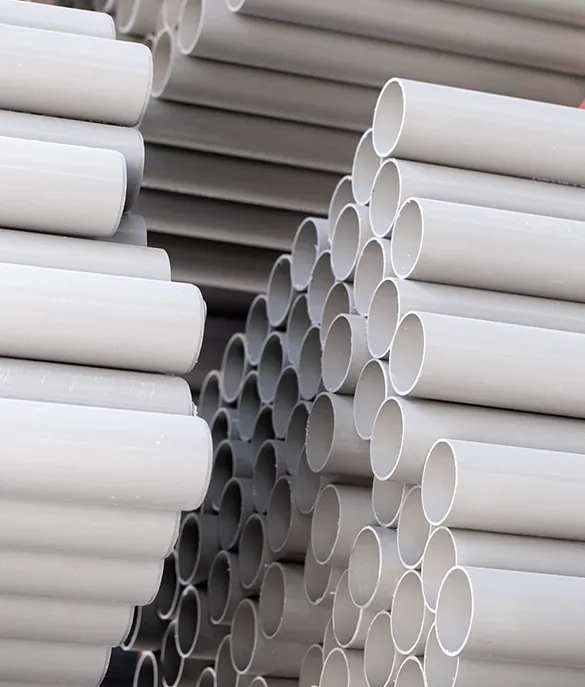

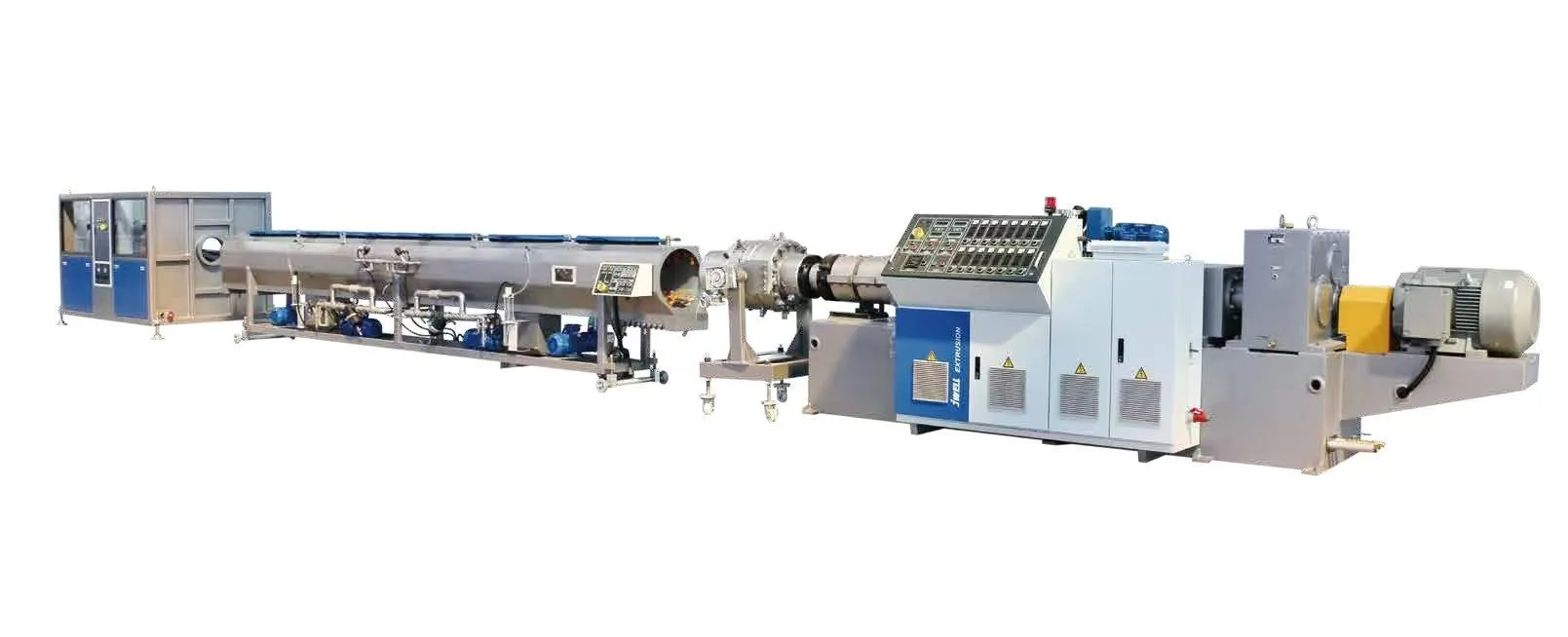
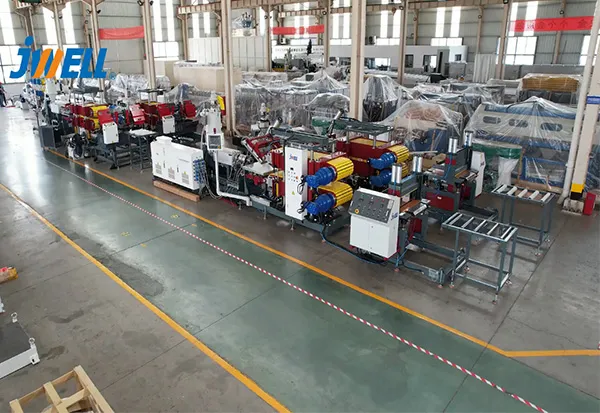

Plastic pipe extruders are core equipment for producing plastic pipes. Using plastic raw materials such as PVC, PE, and PP as base materials, the extruder uses a rotating screw to convey, melt, and plasticize the raw materials before extruding them through a die. This allows for continuous production of pipes of varying diameters and wall thicknesses. With a high degree of automation, the extruder can precisely control pipe size and performance, meeting the piping needs of water supply and drainage, gas, and municipal services.
First, they offer high continuous production efficiency, enabling stable and uninterrupted pipe output, suitable for large-scale production.
Second, they offer controllable dimensional accuracy. Using precision screws, molds, and a shaping system, pipe diameter, wall thickness, and other parameters can be precisely controlled to ensure product consistency.
Third, they offer wide adaptability to raw materials, being compatible with a variety of plastic materials, including PVC, PE, and PP, enabling the production of pipes with varying performance characteristics (such as solid-wall pipes and corrugated pipes).
Fourth, they offer a high degree of automation, integrating heating, plasticizing, extrusion, and cooling processes to reduce manual intervention and ease operational complexity. Fifth, they offer flexible application scenarios. By changing molds and adjusting processes, they can meet the production needs of diverse pipe types in various fields, including water supply and drainage, municipal engineering, agriculture, and healthcare.
Plastic pipe extruders are used in a wide range of applications:
In municipal engineering, they produce water supply and drainage pipes, gas transmission pipes, and sewage corrugated pipes;
In agriculture, they manufacture PE pipes for irrigation and drip irrigation pipes;
In the construction industry, they produce indoor drainage pipes, floor heating pipes, and conduit pipes;
In the medical field, precision machines produce infusion tubing and medical catheters;
In addition, they are used in home appliance applications (such as water dispenser pipes and air conditioning connection pipes) and telecommunications projects (conduit protection pipes). By adapting to different raw materials and molds, they meet the diverse performance and size requirements of pipes in various scenarios.