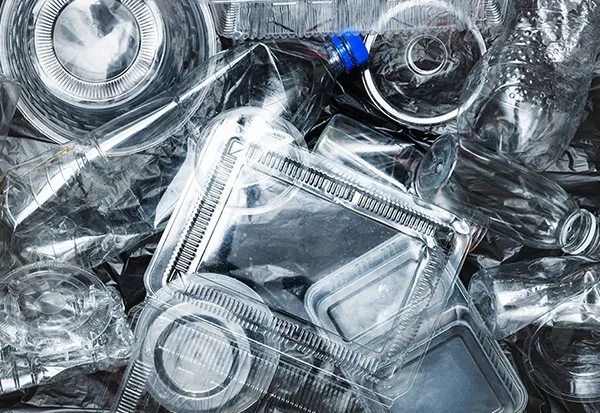
Usually,in PVC plastic extrusion production lines, two mixers are configured to meet the unique processing characteristics and production efficiency requirements of PVC materials. These two mixers typically perform high-speed hot mixing and low-speed cold mixing functions, respectively, working together to form a complete mixing process. The specific reasons are as follows:
1. The processing characteristics of PVC material needs a "two-step mixing" process.
PVC (polyvinyl chloride) is a heat-sensitive material with a complex formulation (typically containing various additives such as resins, stabilizers, plasticizers, fillers, and lubricants). Its mixing process requires addressing two core problems:
• Uniform dispersion of additives: Various additives must be thoroughly mixed with the PVC resin; otherwise, it will lead to performance defects in the extruded products (such as localized aging and uneven strength).
• Temperature control to avoid thermal degradation: PVC resin easily decomposes at high temperatures (above 100°C), producing toxic gases (such as hydrogen chloride), and affecting product quality. Therefore, the temperature during the mixing process must be strictly controlled.
The combination of the two mixing machines perfectly resolved this contradiction:
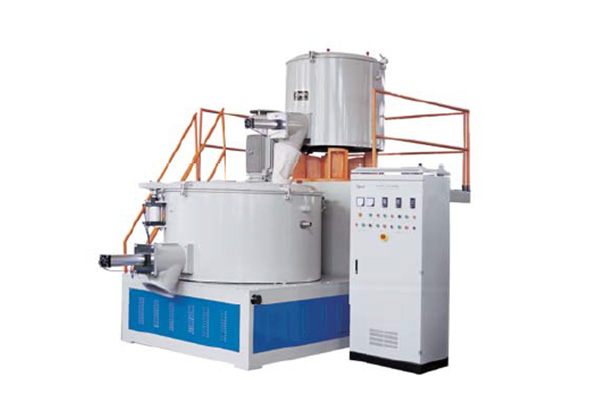
• High-speed hot mixer: This machine generates frictional heat through high-speed stirring (typically 500-1500 rpm), rapidly increasing the material temperature (generally reaching 100-130℃). The high temperature promotes the rapid dissolution and uniform dispersion of additives (such as plasticizers) into the resin, while also evaporating moisture from the material (moisture can cause bubbles during extrusion).
• Low-speed cold mixer: The material temperature is high after hot mixing. If it is directly stored or transported to the extruder, the continuous temperature increase will lead to PVC degradation. The cold mixer uses low-speed stirring (typically 50-100 rpm) and jacketed water cooling to quickly reduce the material temperature to 40-60℃, avoiding the risk of thermal degradation while maintaining the stability of additive dispersion.
2. Improve production efficiency and continuity.
• A single mixing machine cannot simultaneously perform both "hot mixing and dispersion" and "cold mixing and cooling." If only one machine is used, it is necessary to wait for the material to cool down before mixing the next batch, which will seriously affect the production pace.
• Two mixing machines can form a "continuous operation process": after the hot mixing machine completes a batch of material, it is directly discharged into the cold mixing machine for cooling. At the same time, the hot mixing machine can immediately start the hot mixing of the next batch, achieving a seamless connection between "hot mixing and cold mixing," significantly improving mixing efficiency and matching the continuous feeding requirements of the extrusion production line.
3. Ensuring the stability of product quality.
• The key to hot mixing is "uniformity" and "dehydration," while the key to cold mixing is "temperature control" and "anti-agglomeration." If the cold mixing step is omitted and the hot material is directly fed into the extruder, localized overheating may occur, leading to defects such as scorch marks and bubbles in the product; if only cold mixing is used to replace hot mixing, the additives will not be fully dispersed, and the product performance will be significantly reduced.
• The two mixers have clearly defined roles. By strictly controlling the hot mixing temperature and time, and the cooling rate during cold mixing, the consistency of each batch of material can be ensured, thus guaranteeing the stability of the extruded product quality.
Conclusions:
The PVC extrusion production line is configured with two mixers (hot mixing + cold mixing), which is determined by the heat sensitivity of PVC, the complexity of the formula, and the need for continuous production. These two mixers respectively perform the functions of "uniform dispersion of additives + dewatering" and "cooling to prevent degradation + maintaining a stable state," and both are indispensable for achieving efficient and stable production and ensuring product quality.

 English