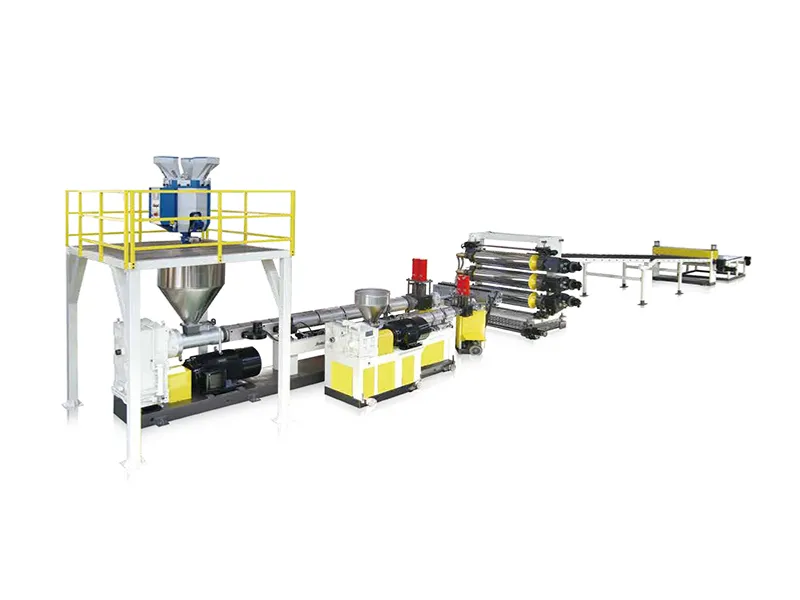
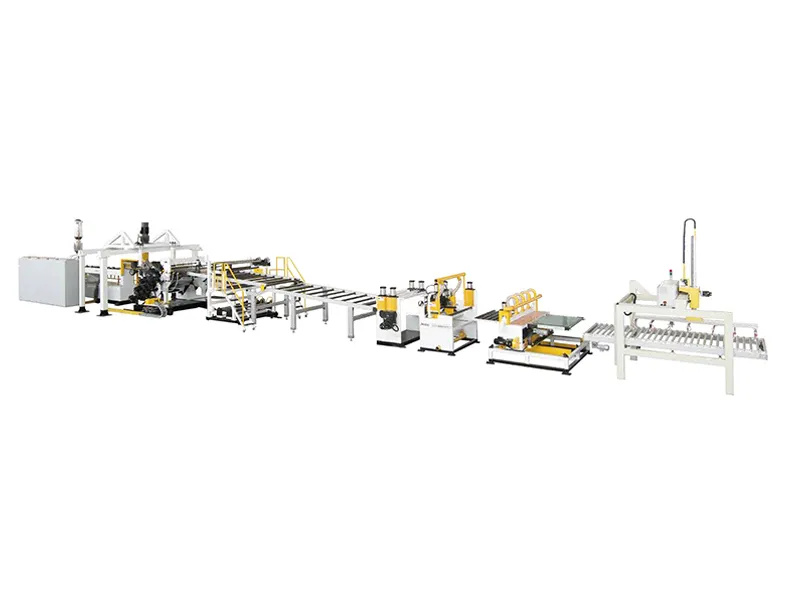
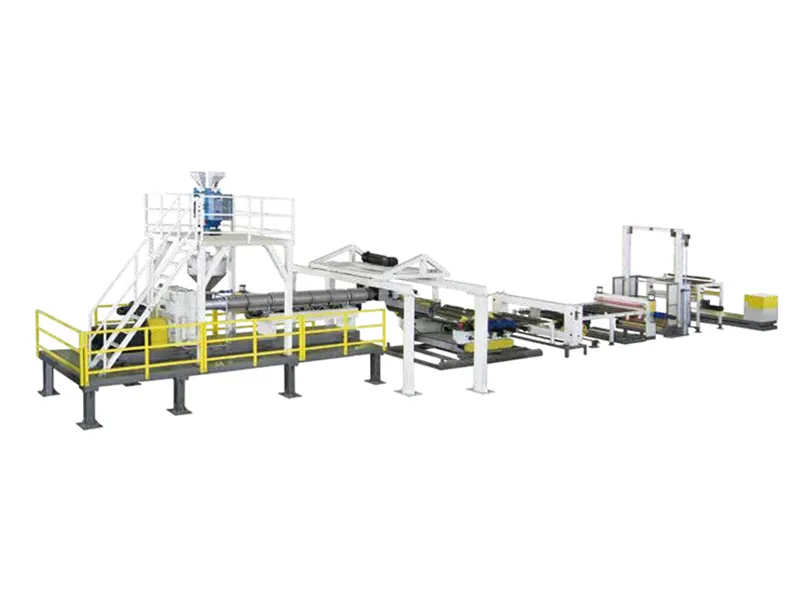
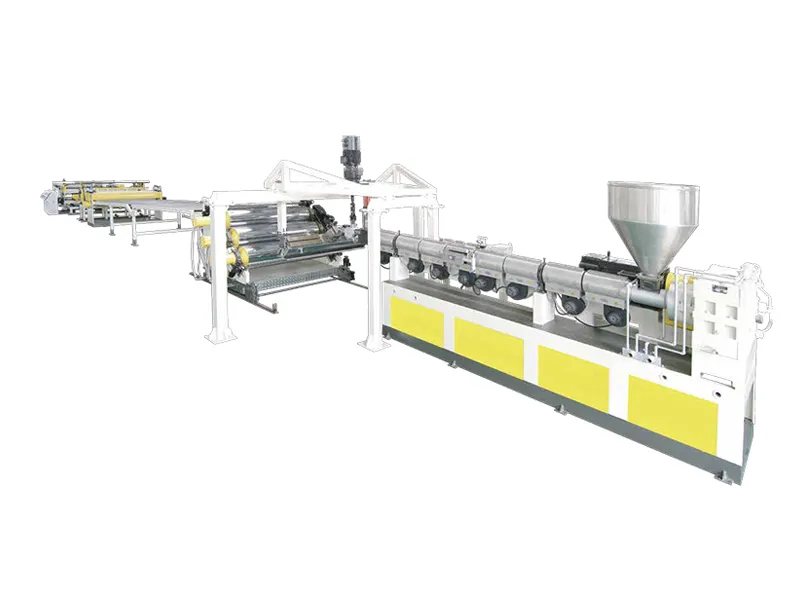
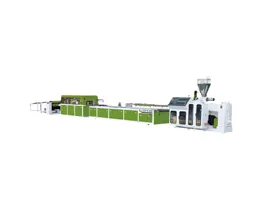
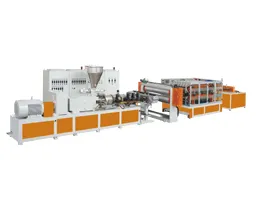
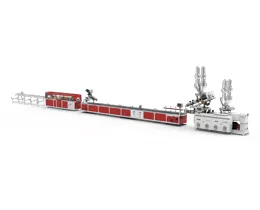
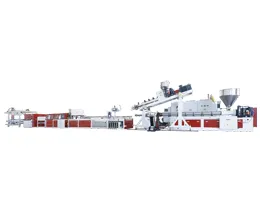
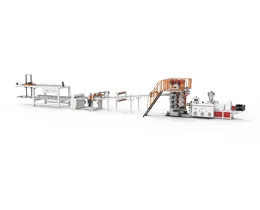
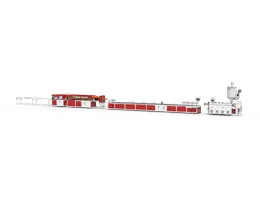
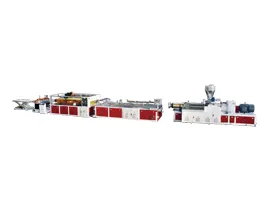
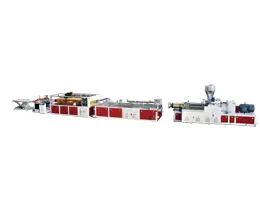
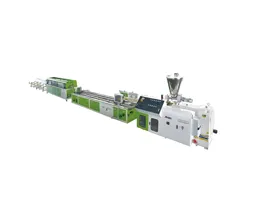
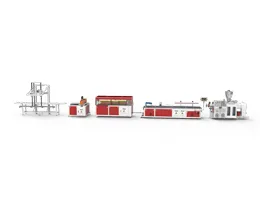
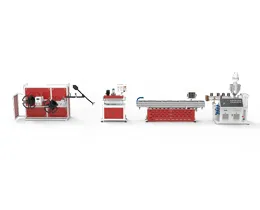
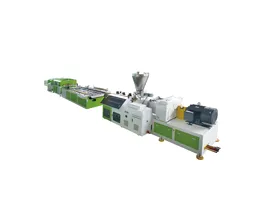
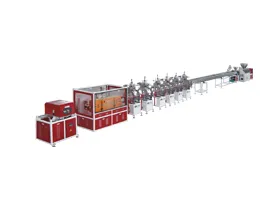
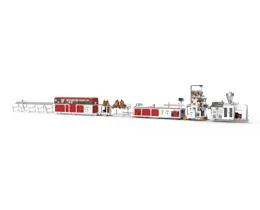
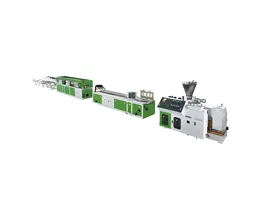
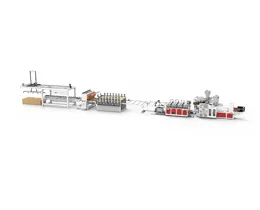
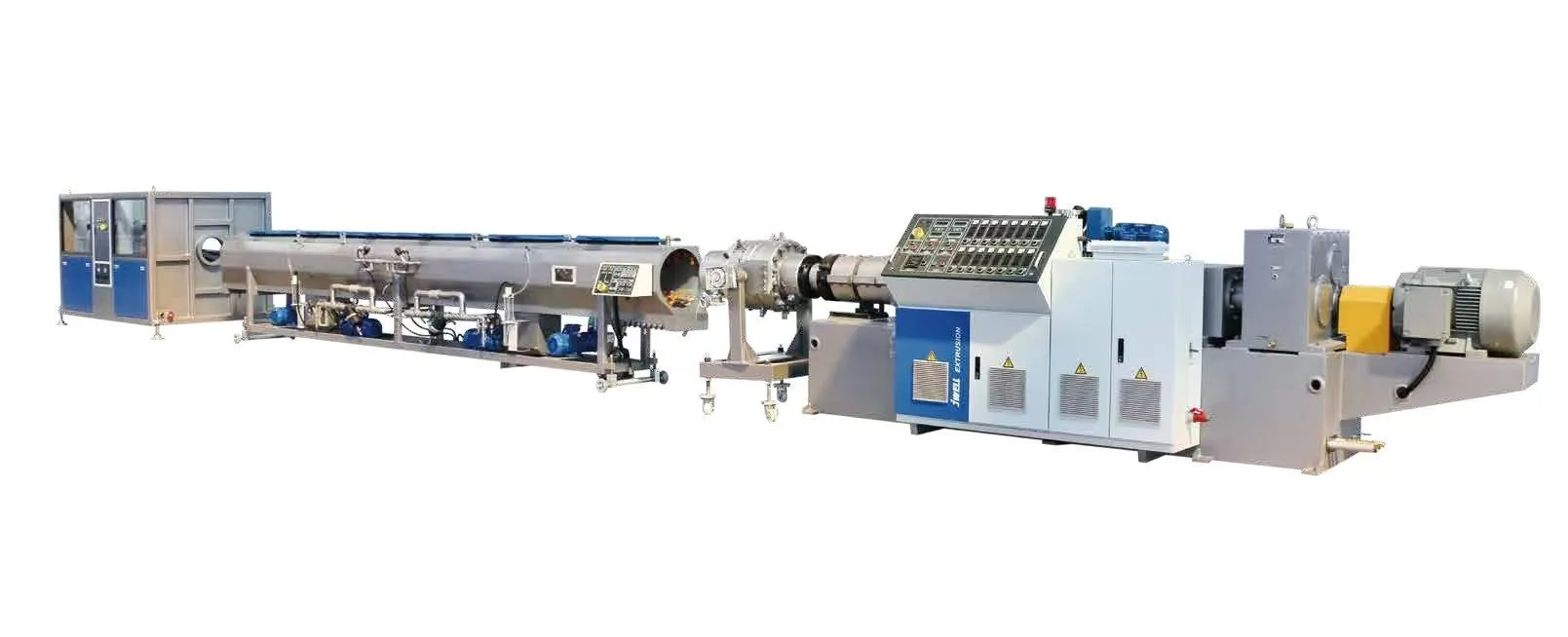
Specifications of PC/PMMA Optic Sheet Extrusion Line
Model | JWS130/38-2400 | JWS120/38-1500 | JWS120-1300 |
Material | PC, PMMA, GPPS, ABS | PC, PMMA, GPPS, ABS | PC |
Products Width | 2100mm | 1220mm | 1000mm |
Products Thickness (mm) | 1.0-10mm | 1.0-10mm | 0.125-1.2mm |
Extruder Specification | Ø130/38; Ø45/30 | Ø120/38 | Ø120/38 |
Capacity (Max.) | 550kg/h | 450kg/h | 400kg/h |
Details of PC/PMMA Optic Sheet Extrusion Line
Understanding PC, PMMA, and GPPS Sheets with JWELL’s Extrusion Systems
Have you ever wondered what materials make up the clear panels in buildings, the bright signs in stores, or the durable liners inside appliances? PC, PMMA, and GPPS sheets are the answer! These plastics are used in countless industries, and JWELL’s advanced extrusion lines produce them with precision and efficiency. Let’s dive into their applications, the components of JWELL’s machines, and why their technology is a top choice for manufacturers.
Introduction to PC, PMMA, and GPPS Sheets
Defining PC, PMMA, and GPPS Sheets: PC (polycarbonate), PMMA (polymethyl methacrylate, also known as acrylic), and GPPS (general-purpose polystyrene) sheets are transparent plastics with distinct properties. PC is highly durable, PMMA offers excellent clarity, and GPPS is lightweight and cost-effective. Each material serves specific purposes across various sectors.
Reasons for Their Industry Popularity: These sheets are widely used because they are lightweight, strong, and more practical than glass. They resist weather, provide high transparency, and are easy to shape. Why choose heavy, fragile glass when these plastics offer superior performance at a lower cost?
Polycarbonate (PC) Sheet Properties: PC sheets feature 88-92% transparency, strong impact resistance, and the ability to withstand extreme temperatures. They also provide excellent insulation, making them suitable for applications in construction and automotive industries.
PMMA (Acrylic) Sheet Properties: PMMA sheets, or acrylic, have 92% light transmission, higher than glass, and resist UV degradation. They are easy to process, maintain clarity over time, and are a cost-effective option for applications not requiring high strength.
GPPS (Polystyrene) Sheet Properties: GPPS sheets are transparent, glossy, and lightweight with a refractive index of 1.59-1.60. They offer strong electrical properties and radiation resistance, ideal for electronics and consumer goods.
Applications of PC Sheets
Construction and Building
Skylights and Roofing: PC sheets are commonly used for skylights and roofing in commercial buildings, malls, and sports facilities. They allow natural light to enter while blocking UV rays, creating bright and safe environments.
Noise and Safety Barriers: PC sheets serve as noise barriers along highways to reduce sound pollution for nearby residents. They are also used as safety barriers in public spaces, withstanding impacts and harsh weather.
Automotive and Industrial Applications
Protective Covers: In industrial settings, PC sheets are used as protective covers for machinery, providing visibility and safety in high-risk environments.
Vehicle Lighting Components: PC sheets are used in vehicle headlights and taillights due to their clarity and durability, ensuring reliable performance in automotive applications.
Applications of PMMA Sheets
Advertising and Signage
Display Boards: PMMA’s high transparency makes it ideal for display boards and LED light boxes, supporting vibrant graphics for advertising in public spaces or stores.
Retail Signage: Retail environments use PMMA sheets for signage and display cases, offering a modern appearance while protecting products. They are easy to shape and maintain.
Medical and Optical Uses
Medical Device Panels: PMMA’s biocompatibility makes it suitable for panels in medical devices, ensuring safety and clarity in healthcare settings.
Optical Lenses: PMMA’s optical clarity is used in lenses for eyeglasses, cameras, and medical tools, providing precision and durability.
Applications of GPPS Sheets
Household Products
Food Packaging: GPPS sheets are used for transparent food packaging, offering a lightweight, cost-effective solution that is easy to clean and maintain.
Appliance Interiors: GPPS sheets line the interiors of appliances like refrigerators, providing a durable, glossy finish that resists wear.
Electronics Applications
Introduction to JWELL’s PC, PMMA, GPPS Sheet Extrusion Line
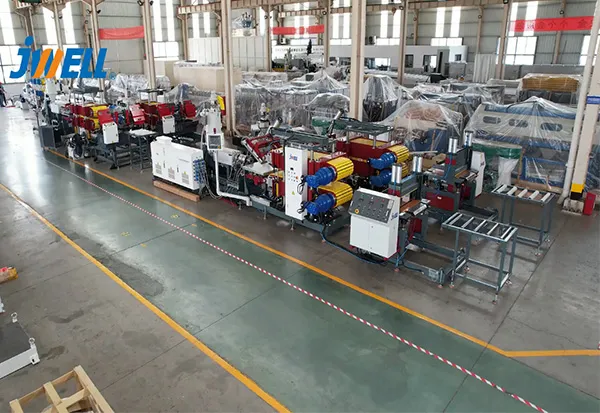
About JWELL Machinery: JWELL Machinery, founded in 1997, is China’s leading manufacturer of plastic extrusion equipment, with facilities in Shanghai, Suzhou, and other locations. With over 3000 employees and 40 years of experience, they are a trusted global supplier.
Function of the Extrusion Line: JWELL’s PC, PMMA, GPPS sheet extrusion line produces high-quality sheets with consistent thickness and transparency, meeting the needs of industries like construction, advertising, and electronics.
Components of JWELL’s PC, PMMA, GPPS Sheet Extrusion Line
Extrusion System
Single Screw Extruder Configuration: JWELL’s line uses single screw extruders with bimetallic barrels, designed for efficient melting of PC, PMMA, and GPPS, ensuring uniform material flow and high output.
Material Feeding System: A gravimetric feeding system synchronizes material input with screw speed, maintaining stable production and consistent sheet quality.
Die and Calendering Unit
T-Die for Uniform Thickness: The T-die ensures sheets have uniform thickness, critical for applications requiring precision, such as optical displays or medical lenses.
Calender Rolls for Surface Quality: Three-roll calender units polish sheets to achieve high transparency, suitable for PMMA and PC applications requiring clear surfaces.
Cooling and Traction Systems
Cooling Framework: Cooling frameworks with high-pressure water flow stabilize sheets after extrusion, preventing deformation and ensuring quality.
Traction Rollers: Traction rollers pull sheets steadily, maintaining uniform thickness and smooth surfaces throughout the production process.
Cutting and Stacking Systems
Automated Cutting Mechanism: Automated cutting systems produce precise sheet sizes, reducing waste and improving efficiency.
Stacking and Conveying: Stacking systems organize finished sheets, streamlining production and preparing them for transport.

 English