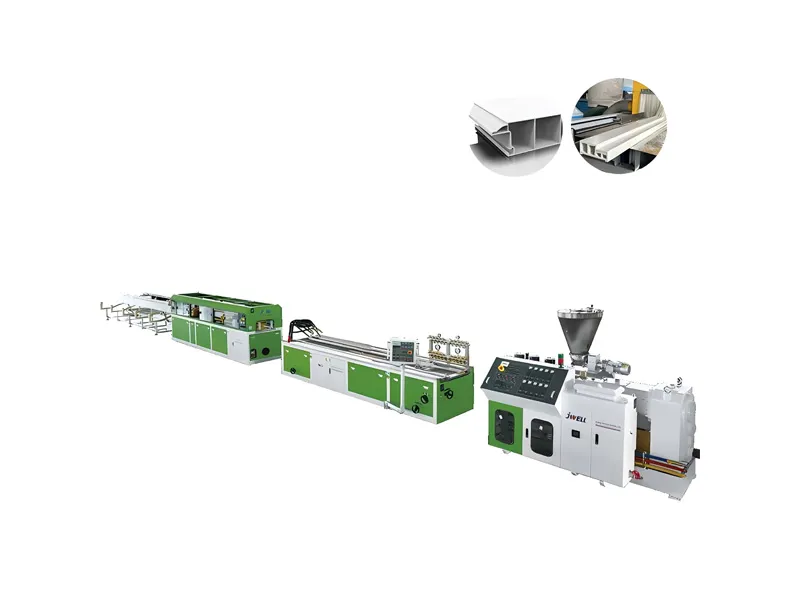
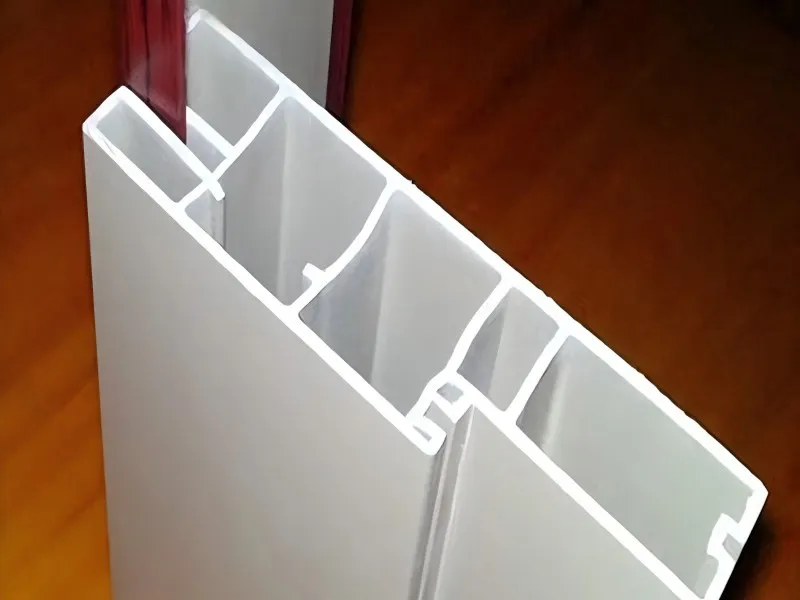
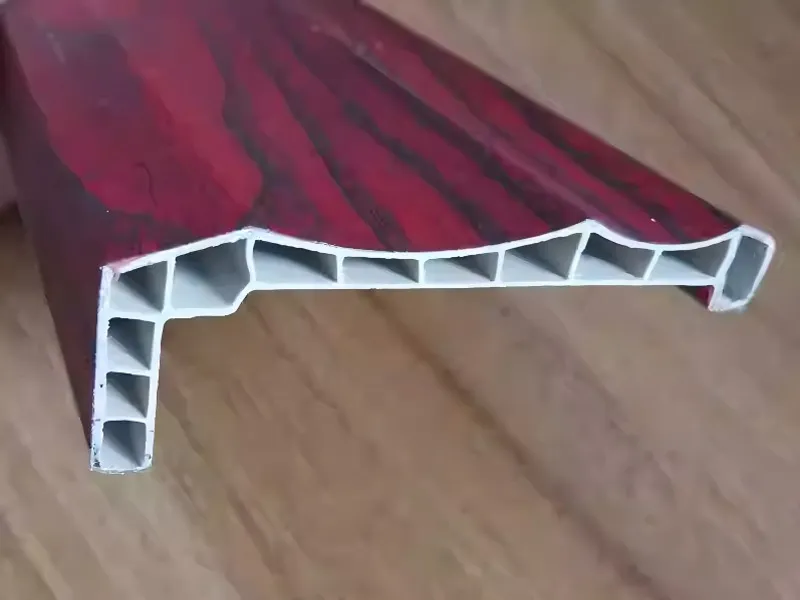
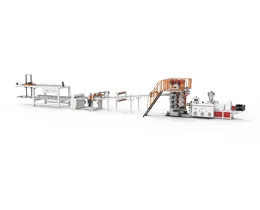
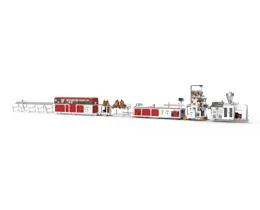
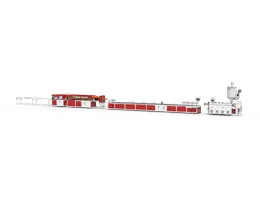
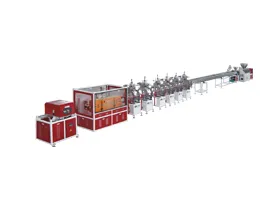
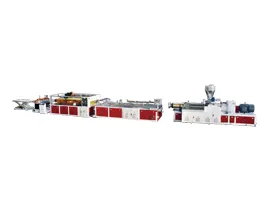
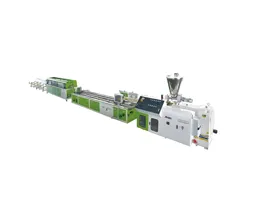
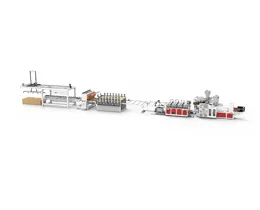
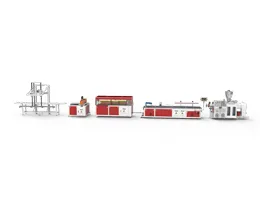
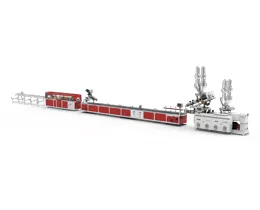
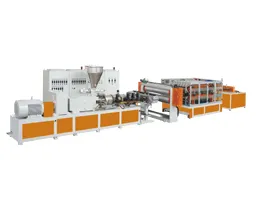
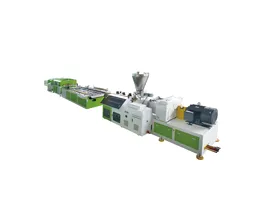
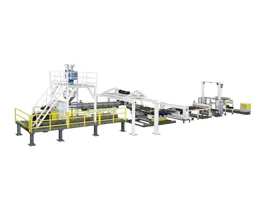
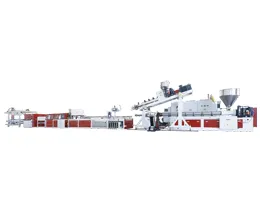
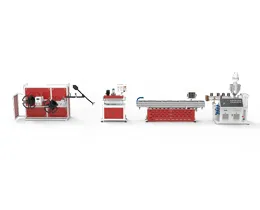
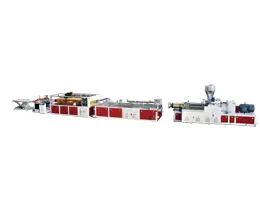
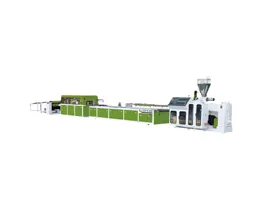
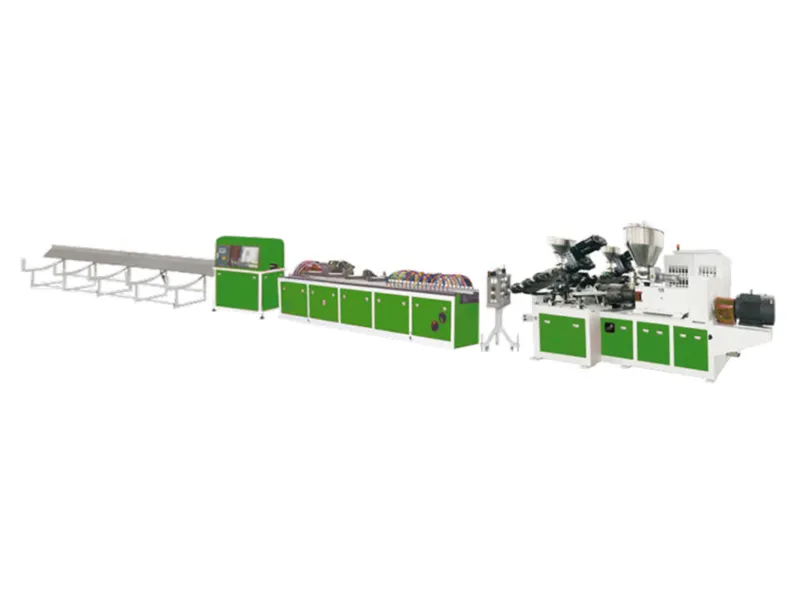
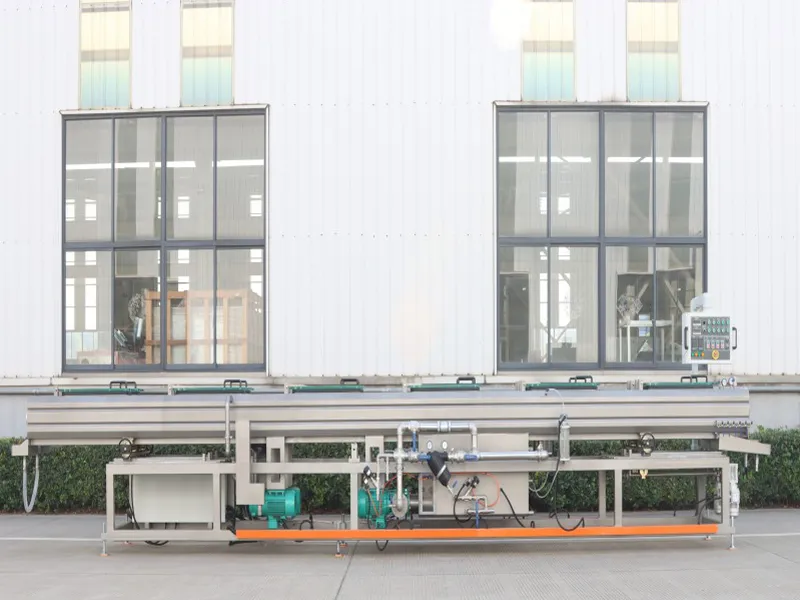
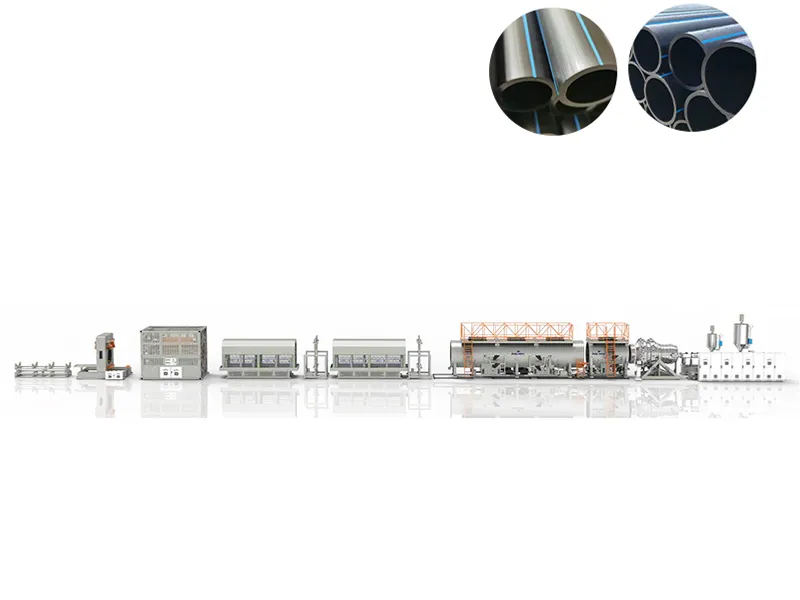
Specifications of PVC Door Frame Extrusion Line
1. Production Efficiency: Adaptable to Large-Scale Demand
The production line achieves high-efficiency mass production through continuous extrusion technology, significantly reducing production costs per unit time—its core advantage.
Continuous Production: Integrated operation from raw material mixing to finished product extrusion and cutting eliminates frequent interruptions.
High Automation: Key processes (such as raw material proportioning, temperature control, and fixed-length cutting) can be automatically controlled by a PLC system, reducing manual intervention, minimizing operational errors, and saving labor costs.
2. Cost Control: End-to-End Cost Reduction
From raw materials to processing and waste utilization, the production line offers multiple cost advantages, meeting the cost-sensitive needs of the building materials industry.
Low Raw Material Costs: It can utilize large quantities of PVC resin (at lower costs than solid wood and aluminum alloy raw materials) and can incorporate appropriate amounts of calcium powder and recycled materials (provided quality standards are met), further reducing raw material costs.
High Waste Utilization Rate: Scrap materials and defective products generated during production can be crushed and remelted for extrusion, achieving a waste recycling rate of over 90%, reducing raw material waste.
3. Controllable Processing Costs: Extrusion processes consume less energy than injection molding and die casting, and have longer equipment maintenance cycles, resulting in relatively stable long-term operating costs.
4. Product Performance: Superior Stability and Adaptability: The PVC door frames produced by this production line meet the market's core quality requirements in terms of physical properties and installation adaptability.
Strong Product Stability: The extrusion process allows for precise control of the door frame's wall thickness and dimensional accuracy (typically with an error ≤0.5mm). PVC material is moisture-resistant, corrosion-resistant, and not easily deformed, solving the problems of traditional solid wood door frames being prone to moisture and mold, and aluminum alloy door frames being prone to oxidation.
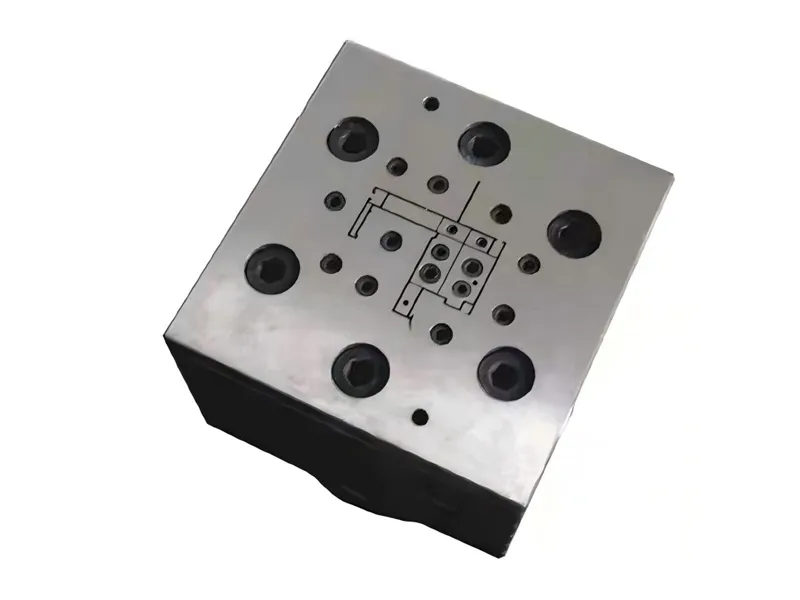
Flexible Style Adaptability: By changing the extrusion mold, products with different shapes (such as flat, embossed, and linear decorations) and different specifications (such as single-leaf and double-leaf door frames) can be produced without large-scale equipment adjustments, quickly responding to market style demands.
5. Environmental Protection and Installation: Aligned with Industry Trends: The production line's advantages in environmental protection and downstream installation adaptability further enhance its market competitiveness. Superior Environmental Friendliness: Modern production lines are equipped with exhaust gas treatment devices, reducing VOC emissions during processing. Furthermore, PVC door frames require no painting (the surface can be directly coated with a film or co-extruded colored layer), avoiding harmful substances such as formaldehyde found in paint, thus meeting green building material standards.
High Ease of Installation: Extruded PVC door frames are mostly hollow or snap-fit structures, lightweight (30%-50% lighter than solid wood door frames), and standardized in size. Installation requires no complex cutting or sanding; they can be directly fixed using snaps or adhesives, shortening on-site installation time.
Technical Parameter
Model | SJZ55 | SJZ65 | SJZ80 |
Screw size | 55/110 | 65/132 | 80/156 |
Main motor power | 22kw | 37kw | 55kw |
Output | 100-150kg/h | 150-200kg/h | 250-350kg/h |

 English