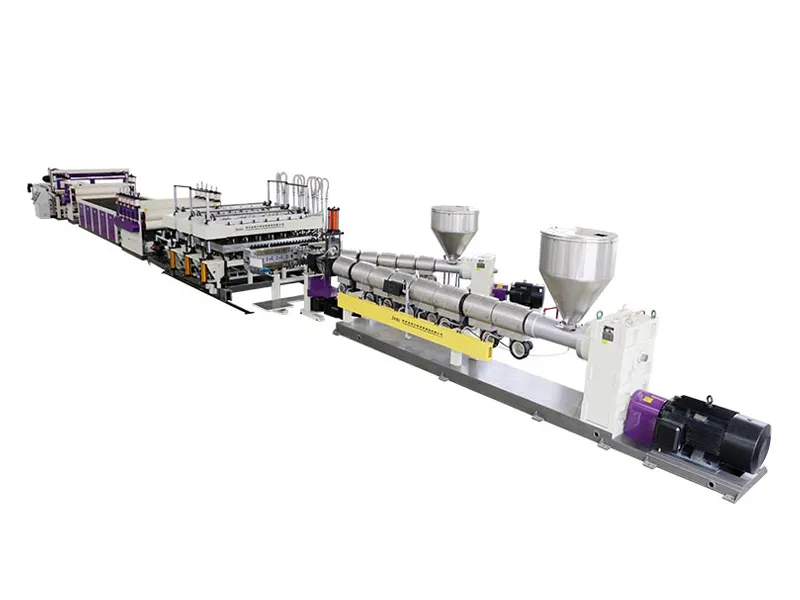
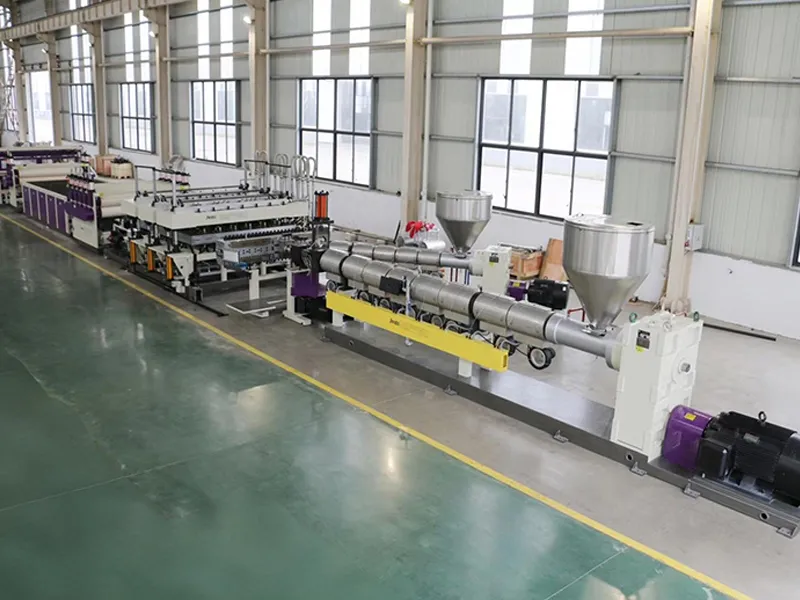
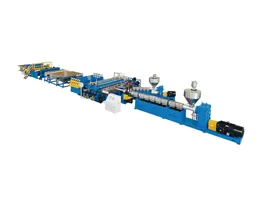
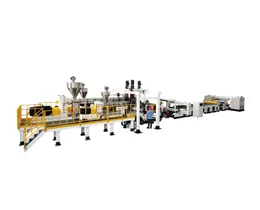
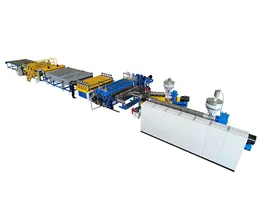
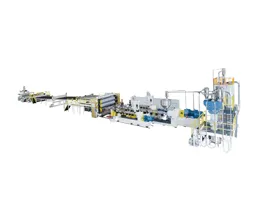
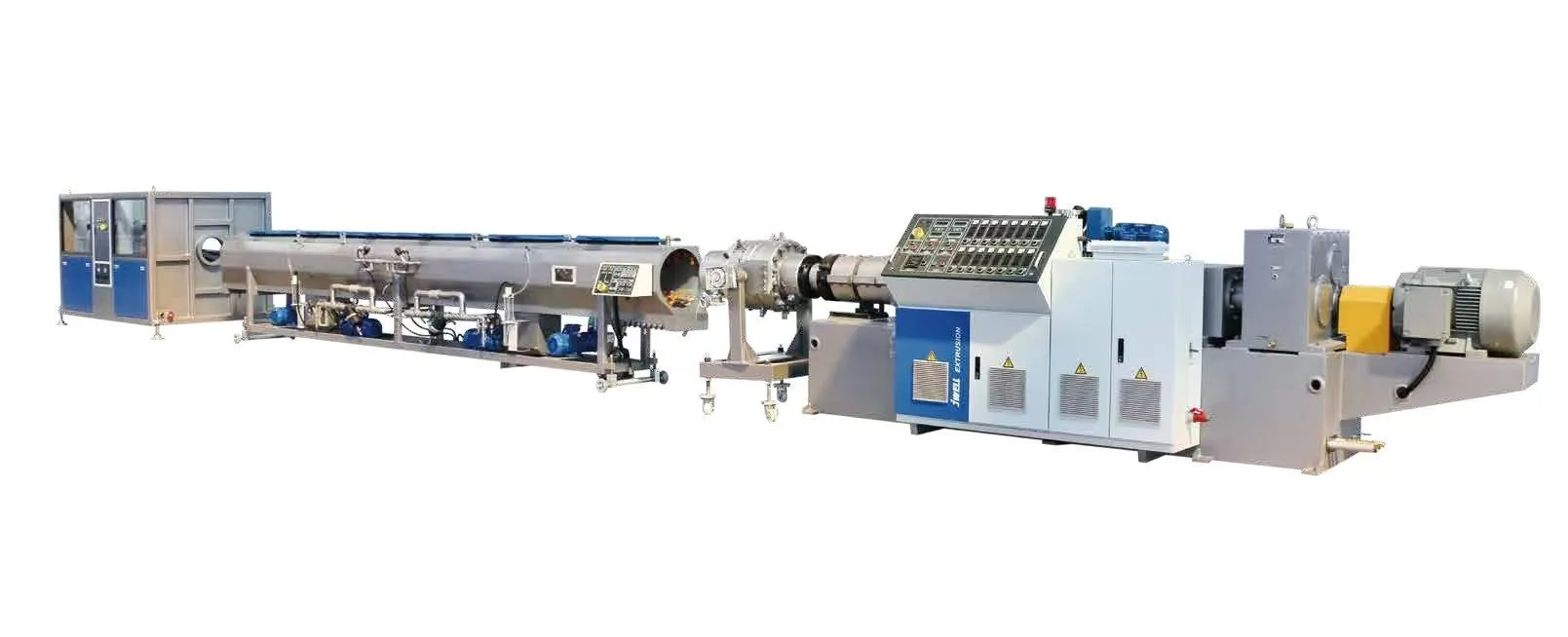
Specifications of PP Hollow Building Formwork Construction Template Extrusion Line
Model | JWS130(80)-1320 | JWS150(80)-2000 | CJWH85(80/52)-2000 |
Material | PP modified material | PP modified material | PP modified material |
Products width | 915/1220mm | 915mm*2 | 915mm*2 |
Products thickness | 15-17mm | 15-17mm | 15-17mm |
Extruder specification | JWS130/35 JWS80/35 | JWS150/35 JWS80/35 | CJWH85 CJWH52 JWS80 |
Capacity (Max.) | 450~500KG/H | 550~600KG/H | 600~700KG/H |
Details of PP Hollow Building Formwork Construction Template Extrusion Line
PP Hollow Building Formwork and Jwell's Advanced Extrusion Technology
Picture a construction site where formwork is lightweight, reusable, and eco-friendly. That's what PP hollow building formwork offers! This innovative material is transforming construction, and Jwell's extrusion lines make producing it efficient and precise. Let's explore what PP hollow formwork is, how it's used, and why Jwell's technology is a top choice for manufacturers.
Introduction to PP Hollow Building Formwork
What is PP Hollow Building Formwork?
PP hollow building formwork consists of polypropylene plastic panels with a hollow, grid-like structure. These panels mold concrete into shapes like walls, slabs, or columns. They're lightweight, durable, and designed for multiple uses, making them ideal for modern construction.
Why It's Popular in Construction
Why is PP formwork gaining traction? It's reusable up to 60-100 times, resists water and corrosion, and is recyclable. It reduces costs and environmental impact, appealing to builders looking for efficiency and sustainability.
Lightweight and Strong
PP formwork is significantly lighter than steel or wood but can withstand concrete pressures up to 80kN/m². This combination makes it easy to handle while ensuring structural integrity.
Eco-Friendly and Reusable
Made from recyclable polypropylene, PP formwork minimizes waste. Scraps can be recycled into new panels, supporting sustainable construction practices and reducing material costs.
Key Benefits of PP Hollow Formwork
Durability in Harsh Conditions: PP formwork resists moisture, acids, and alkalis, performing well in tough environments like rainy or humid sites. It maintains strength and shape, ensuring reliable performance.
Cost Savings Compared to Traditional Materials: PP formwork lasts longer than wood and requires less maintenance than steel, reducing overall expenses. It's a cost-effective solution for projects of all sizes.
No Need for Release Agents: Unlike traditional formwork, PP panels don't require release agents. A simple water rinse prepares them for the next use, saving time and resources.
Reduced Labor Costs: The lightweight design of PP formwork reduces handling efforts, cutting labor costs by up to 20% compared to plywood or metal. It simplifies work for construction crews.
Applications of PP Hollow Building Formwork
Residential and Commercial Construction
Walls and Slabs: PP formwork excels in casting concrete walls and slabs. Its smooth surface produces high-quality finishes, minimizing the need for additional polishing or repairs.
Columns and Beams: For columns and beams, PP formwork ensures precise shaping and easy demolding, speeding up construction while maintaining accuracy.
Infrastructure Projects
Bridges and Tunnels: Bridges and tunnels require materials that resist water and corrosion. PP formwork's durability makes it suitable for these challenging environments.
High-Rise Buildings: In high-rise construction, PP formwork's lightweight nature lowers crane and labor costs, making it a preferred choice for tall structures.
Specialized Uses
Patterned Surfaces for Aesthetics: Some PP formwork panels feature patterned surfaces to create decorative concrete finishes, ideal for bridge piers or architectural elements.
Wet Environment Applications: PP formwork performs well in wet environments like basements or piers, where its moisture resistance ensures consistent performance.
Comparing PP Hollow Formwork to Traditional Options
Wood and Plywood Formwork: Wood and plywood are prone to moisture damage and wear out quickly, while PP formwork remains stable and reusable, offering a longer lifespan.
Steel and Aluminum Formwork: Steel and aluminum are heavy and susceptible to rust, requiring frequent maintenance. PP formwork is lighter and corrosion-resistant, simplifying handling and upkeep.
Weight and Handling: PP formwork's reduced weight makes it easier to transport and install compared to steel or wood, improving efficiency on construction sites.
Longevity and Maintenance: With a longer lifespan and minimal maintenance needs, PP formwork outperforms traditional materials, reducing long-term costs.
Components of JWELL PP Hollow Building Formwork Extrusion Line
Extruder System
Single and Twin Screw Extruders: Jwell's line includes single and twin screw extruders. Single screws handle standard tasks, while twin screws process complex materials effectively.
High-Precision Screw Design: The screws are designed to melt polypropylene uniformly, ensuring consistent panel quality throughout production.
Molding and Calibration Systems
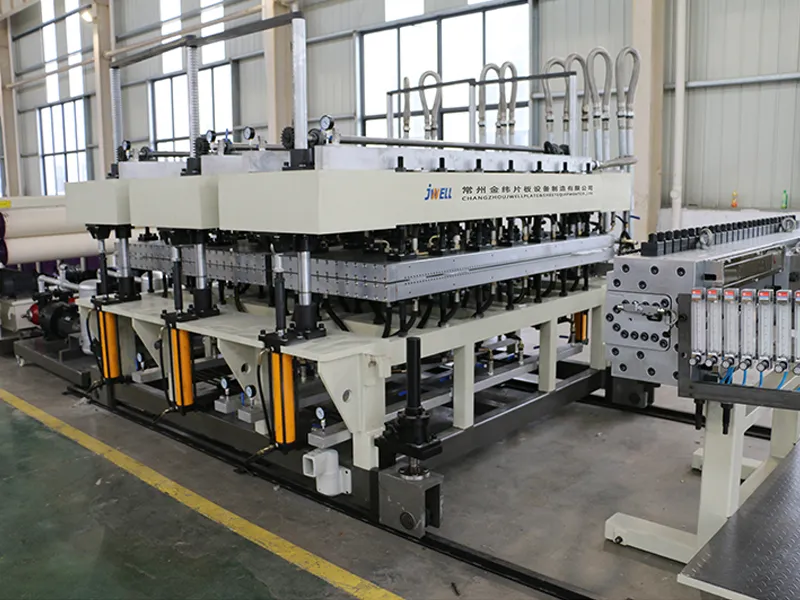
T-Die for Consistent Thickness: The T-die ensures uniform panel thickness, which is critical for meeting construction standards.
Vacuum Calibration Technology: Vacuum calibration maintains precise panel shapes during production, ensuring compliance with quality requirements.
Cooling and Finishing Systems
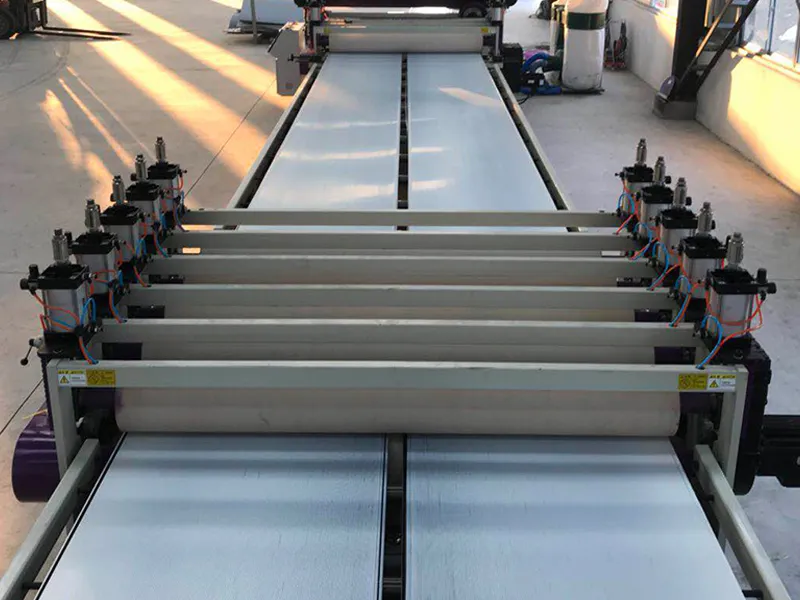
Advanced Cooling Mechanisms: Advanced cooling systems stabilize panels quickly, preventing deformation and increasing production speed.
Automated Cutting and Stacking: Automated cutters ensure accurate panel sizes, and stackers organize them for efficient production.
Conclusion
PP hollow building formwork is revolutionizing construction with its lightweight design, durability, and eco-friendly properties. From residential projects to major infrastructure, it offers unmatched versatility and cost savings. Jwell's extrusion lines make producing these panels efficient, with high output, automation, and sustainability features. Ready to transform your construction projects? PP formwork and Jwell's technology are the perfect solution!

 English