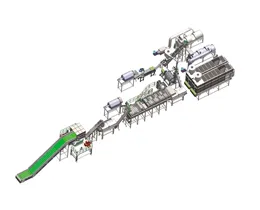
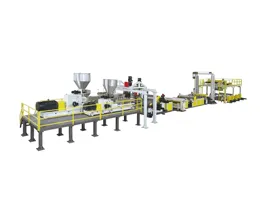
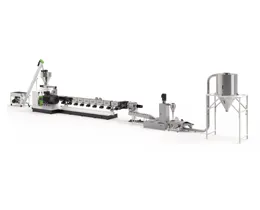
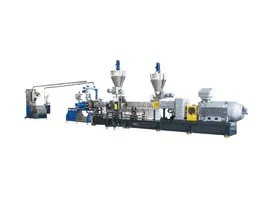
There are many types of plastics, but recycling plants mainly process three categories: PET, PE, and PP. These three offer stable sources, high recycling value, and the best compatibility with washing lines.
Different plastics have different material properties, recycling scenarios, and contaminant types. The corresponding washing processes and equipment configurations must be customized. Using a generic washing line can compromise cleaning results, reduce recycled material quality, increase operating costs, and shorten equipment life. Based on practical experience, this article breaks down the recycling essentials for these three mainstream plastics and the matching washing line solutions, helping you make the right choice and avoid costly mistakes.
Mainstream Plastic Types Processed in Modern Recycling Plants
The core profit logic for a recycling plant is: "collect efficiently, wash cleanly, sell profitably." Therefore, the plastics you choose to process should meet three conditions: stable source, high recycling value, and moderate cleaning difficulty. Currently, over 80% of small to medium-sized recycling plants focus on PET, PE, and PP. These three cover many daily and industrial applications, with strong demand for recycled material – making them the top choice for beginners.
Beyond these three, some large-scale plants also recycle PVC, ABS, and other plastics. However, these are harder to clean, have stricter environmental requirements, and face smaller downstream markets – not recommended for newcomers. If you are planning to invest in a washing line, first master the recycling logic and cleaning requirements for PET, PE, and PP. That is the key to reducing risk and achieving rapid profitability.
PET Plastic Recycling: Properties & Dedicated Washing Line Requirements
PET (polyethylene terephthalate) is the most common food packaging plastic and one of the highest-value recyclables. Everyday examples include water bottles, beverage bottles, and cooking oil bottles.
From a practical standpoint, the core challenges of PET recycling are difficult contaminant removal and susceptibility to degradation. Bottles often carry labels, adhesives, and oil residues, and PET is prone to molecular chain breakage at high temperatures, which degrades recycled material quality. Therefore, a PET washing line must meet two key requirements: precise temperature control to prevent degradation, and multi-stage cleaning to thoroughly remove stubborn contaminants.
Practical tips: PET recycling first requires a label remover to strip labels and separate caps (caps are usually PE). Then the bottles are crushed into uniform flakes, followed by pre-washing, high-temperature friction washing, multi-stage rinsing, dewatering, and drying. The final high-purity flakes are suitable for fiber production, bottle blowing, and other downstream applications. The temperature control system and friction washing unit are critical for determining recycled PET quality.
PE Plastic Recycling: Properties & Customized Washing Line Solutions
PE (polyethylene) is one of the most widely used plastics. It includes HDPE (high-density polyethylene) and LDPE (low-density polyethylene). Common recycling sources include plastic film, plastic bags, detergent bottles, and milk bottles.
The main challenges in PE recycling are diverse forms and severe contaminant adhesion. Film-type PE (e.g., grocery bags, agricultural film) is thin and prone to tangling in equipment, and often carries sand, dirt, and oil. Rigid PE (e.g., detergent bottles) requires removal of printed layers and stubborn stains. Therefore, a PE washing line needs customized configurations based on the material form.
Practical tips: Film-type PE requires specialized film shredding and de‑tangling equipment to prevent wrapping. Rigid PE can follow a similar crushing and washing process as PET, but friction washing intensity should be optimized to avoid damaging the material. The core of a PE washing line is anti‑tangling design and strong decontamination, with attention to water circulation to reduce operating costs.
PP Plastic Recycling: Properties & Matching Washing Line Configuration
PP (polypropylene) is used in woven bags, food containers, automotive parts, plastic buckets, and more. It is tough and heat-resistant, making recycling relatively less difficult. However, PP recycling places high demands on separation precision.
The core challenge in PP recycling is mixing with other plastics. For example, woven bags often contain PE threads and other impurities; food containers may be mixed with PS (polystyrene). Incomplete separation significantly reduces the purity and selling price of recycled material. Therefore, a PP washing line must emphasize sorting and separation functions, while also accommodating PP's cleaning needs.
Practical tips: PP recycling starts with sorting equipment to separate mixed plastics. Then choose the appropriate shredding method based on material hardness. Washing mainly uses room-temperature friction washing (PP has good heat resistance, so strict temperature control is not required), focusing on removing surface dust, printed layers, and oil stains. After dewatering and drying, the recycled material can be used to make plastic pellets, pipes, and more.
Key Selection Factors for Washing Lines by Plastic Type
For newcomers, the core principle is not "the more expensive, the better" but "the right fit for your target material, capacity, and budget." Based on practical experience, focus on the following five factors to avoid blind purchasing:
Material form – Clearly identify whether you are recycling bottles (PET, HDPE), film (LDPE), or woven bags (PP). Different forms require very different washing line configurations.
Capacity requirements – Choose a line that matches your daily processing volume (e.g., 500 kg/h, 1,000 kg/h). Avoid over‑ or under‑capacity.
Type of contaminants – Based on the pollutants in your plastic (e.g., heavy oil, many labels), select equipment with enhanced cleaning units for those specific challenges.
Environmental compliance – According to local environmental standards, choose a washing line with water circulation and wastewater treatment to avoid costly retrofits later.
Future expandability – Prioritize modular designs that allow you to add units and increase capacity as your business grows, reducing the cost of second investments.
Comparison Table: Three Mainstream Plastics & Washing Line Compatibility
| Plastic Type | Common Recyclable Materials | Core Recycling Challenges | Key Washing Line Requirements | Main Applications for Recycled Material |
|---|
| PET | Water bottles, beverage bottles, cooking oil bottles | Difficult removal of labels/adhesives/oil; prone to degradation | Precise temperature control, multi‑stage washing, high‑efficiency label removal | Polyester fiber, recycled bottles, strapping |
| PE | Plastic film, plastic bags, detergent bottles | Tangling in equipment, heavy contaminant adhesion | Anti‑tangling design, strong decontamination, water circulation | Plastic film, pipes, injection‑molded products |
| PP | Woven bags, food containers, plastic buckets | Easily mixed with other plastics, difficult separation | High‑precision sorting, room‑temperature friction washing | Recycled pellets, plastic pipes, auto parts |
Summary
PET, PE, and PP are the three most profitable plastic categories for recycling plants. The washing lines for each must be tailored to their specific material properties and recycling challenges. For beginners, we recommend first identifying which plastic type you plan to recycle, then choosing a washing line based on your capacity, budget, and environmental requirements. Start by mastering the recycling process for a single material, then gradually expand your business. That is the surest path to steady profitability.

 English