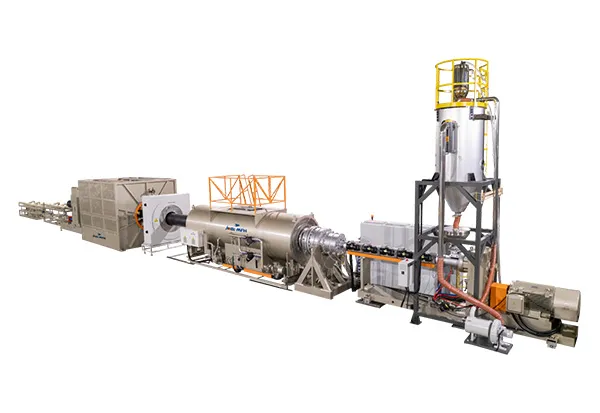
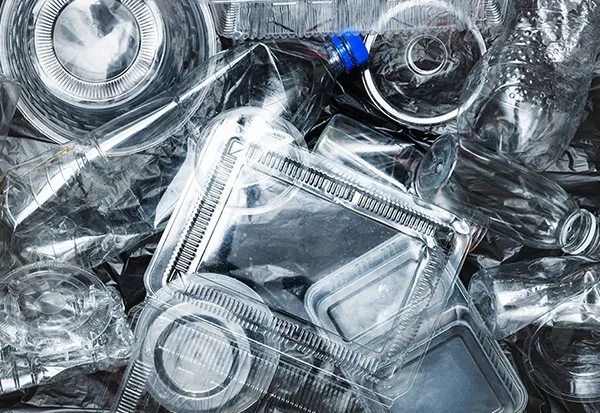
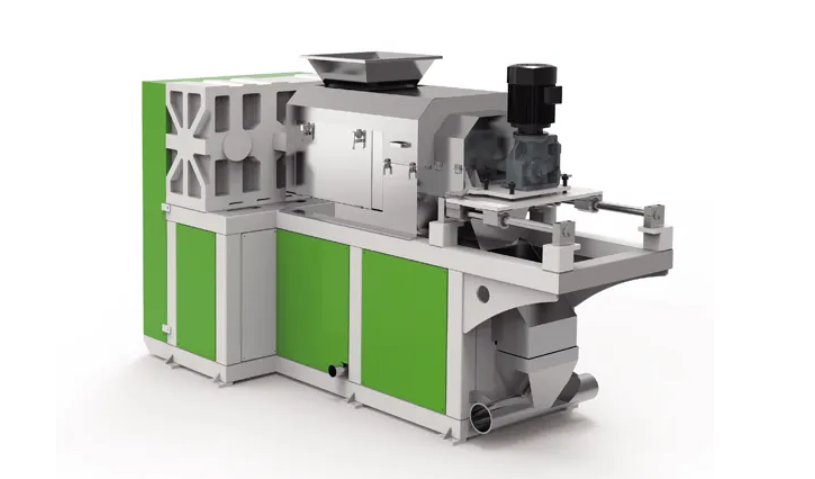
With the deepening implementation of dual-carbon goals and the accelerated development of the plastic circular economy, the recycling and regeneration of waste plastic pipes has become a crucial necessity for industries such as chemicals, environmental protection, and pipe manufacturing. As a core piece of equipment at the front end of a plastic recycling production line, the large-diameter plastic pipe shredder, with its high torque and strong adaptability, can efficiently transform large-volume, multi-specification waste pipes into uniform shreds. This lays a solid foundation for subsequent cleaning, sorting, and granulation processes, and is a key bridge connecting waste pipes to recycled raw materials.
Core Working Logic of Large-Diameter Plastic Pipe Shredder: Low-Speed Shearing, High-Efficiency Volume Reduction
Compared to ordinary crushers, the plastic shredder for sale features a "low-speed, high-torque" crushing mode. Through the triple mechanical action of shearing, tearing, and extrusion, it perfectly adapts to the hollow, long, and unevenly thick wall structure of plastic pipes, achieving high-efficiency volume reduction and material refinement. The overall workflow consists of four key stages:
Convenient Feeding, No Pre-processing Required:
Considering the length characteristics of plastic pipes, the equipment is equipped with a horizontal feeding platform as standard, allowing for direct feeding of 6-meter-long pipes, eliminating the need for pre-cutting. Larger models are equipped with a hydraulic pushing system, which intelligently controls the pushing speed via PLC, firmly pressing thick-walled pipes against the cutter shaft, fundamentally preventing material slippage and ensuring smooth feeding.
Powerful shredding, suitable for various pipe types:
After the material enters the shredding chamber, the alloy steel moving blades and fixed blades on the rotating cutter roller form a precise shearing surface. The low-speed rotation of 20-60 rpm generates powerful torque, gradually tearing and cutting the pipe. For corrugated pipes, spiral wound pipes, and other irregularly shaped pipes, the equipment is equipped with special toothed cutter rollers for precise engagement, completely eliminating material jamming.
Precise particle control, matching subsequent processes:
The shredded material is filtered through a screen at the bottom of the equipment. Operators can change screens with different apertures according to the different needs of subsequent granulation and regeneration processing, precisely controlling the output size to ensure the shredded material perfectly matches downstream production requirements.
High-efficiency discharge, significantly reducing costs:
The processed shredded material is quickly discharged via gravity discharge or a matching conveyor system. The equipment's volume reduction ratio can reach over 10:1, significantly reducing the volume of waste pipes and effectively lowering subsequent transportation and storage costs.
From a structural perspective, large-diameter plastic pipe shredders mainly consist of a power system (motor + hardened gear reducer), a shredding system (cutter shaft, moving blades, fixed blades), a feeding system (hydraulic pusher + feed inlet), a control system (PLC intelligent control cabinet), and a machine frame. The cutter shaft bearings feature an external sealing design, effectively isolating dust generated during plastic shredding and significantly extending the service life of vulnerable parts. This is a core design advantage of industrial-grade shredders.
Plastic Pipe Shredder Selection Guide: Matching to Demands, Precisely Adapting to Production Needs
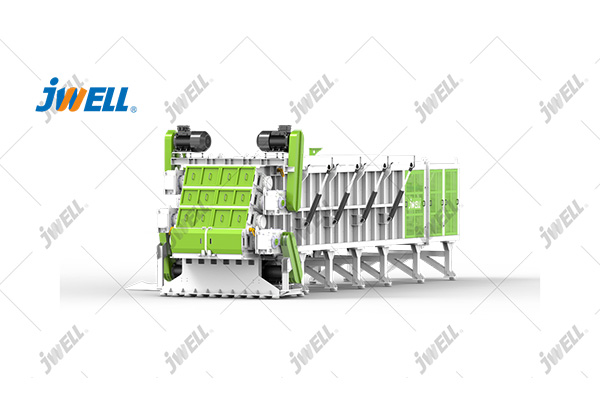
The core of selecting a plastic pipe shredder revolves around three key indicators: the material being processed, the pipe diameter, and the daily processing capacity. Selecting the appropriate model maximizes equipment efficiency and achieves green and efficient production. Taking the JWELL Company's DYSSG-1600 large-diameter pipe shredder as an example, this model can easily handle the recycling and processing of various waste pipes, such as industrial pipes and municipal drainage pipes. It is the preferred equipment for large-diameter pipe recycling, with core features in three aspects:
High-strength housing construction, robust and durable: The shredding housing is constructed from high-strength structural steel, integrally welded and processed through stress-relief heat treatment and precision machining. This ensures both the overall structural strength of the housing and the precise control of the main shaft installation accuracy. It boasts excellent impact resistance and wear resistance, adaptable to long-term high-load industrial production.
Four-rotor angled shredding system, more thorough shredding: The rotor plane forms a 70° angle with the bottom plate of the chamber, fundamentally preventing material accumulation within the shredding chamber and completely solving the industry pain point of "incomplete shredding" in traditional shredders. Simultaneously, the optimized rotor diameter increases the shearing angle between the moving and fixed blades, making the equipment more adaptable and capable of efficiently processing various materials such as PE pipes, PVC pipes, and even rubber products.
Flexible power configuration, energy-saving, and intelligent: The equipment's four rotor motors support independent start and stop, intelligently matching the number of operating rotors according to the actual pipe diameter—all four rotors are fully operational when processing 1600mm pipes, three rotors are operational for 1200mm pipes, and only two rotors are needed for 800mm pipes. Intelligent adjustment of the number of operating rotors reduces ineffective energy consumption at the source, lowering production costs; the fully automated operation mode significantly reduces manual intervention, making operation safer and more worry-free.
Core Technological Highlights of Industrial-Grade Plastic Pipe Shredders: Durability, Intelligence, and Ease of Maintenance
The market competitiveness of industrial-grade plastic pipe shredders lies more in their detailed design and technological innovation. The core advantages of current mainstream models are concentrated in three dimensions: durability, intelligence, and ease of maintenance, truly meeting the actual needs of industrial production:
Comprehensive Upgrade of Blades and Wear-Resistant Parts, Extending Service Life: The moving blades are forged from DC53 or D2 high-strength alloy steel, with a hardness reaching HRC58-62. Each blade is equipped with four cutting edges, which can be rotated and reused after wear, increasing service life by 3 times compared to ordinary blades. The shredding chamber is lined with wear-resistant plates throughout, effectively resisting impact and wear during pipe shredding, further extending the overall service life of the equipment.
Intelligent Control System for Unmanned Operation: The equipment is equipped with a Siemens PLC intelligent control system, integrating core functions such as automatic forward and reverse rotation, overload protection, and adaptive feeding speed. When thick-walled HDPE pipes are detected, the system automatically reduces the pushing speed to avoid motor overload; in case of jamming, the equipment automatically reverses to clear the obstruction, requiring no manual intervention throughout the process. Some high-end models also support remote monitoring and fault early warning, making equipment maintenance more convenient and significantly reducing maintenance costs.
The machine features a dual design for environmental protection and safety, taking into account both production and operating environments: The entire machine is equipped with professional vibration damping devices, ensuring that vibration and noise levels meet industrial environmental standards during operation, improving the workshop working environment while maintaining production efficiency; safety light curtains and emergency stop buttons are installed at the feed inlet to prevent accidents from the operator's perspective; the frame is welded from thick steel plates and annealed to eliminate internal stress, allowing it to stably withstand the impact of long-term high-load operation and ensuring equipment operational stability.
Full-Scenario Application of Plastic Pipe Shredders: Covering the Entire Industry Chain and Empowering the Circular Economy
Today, the application scenarios of plastic pipe shredders have long since broken through the boundaries of traditional recycling plants, extending to all links in the plastic industry chain, including pipe production, municipal engineering, and solid waste treatment. This forms a complete resource recycling loop of "source reduction — recycling — product reuse," providing core equipment support for green development in various fields:
Pipe Manufacturing Enterprises: Achieving Raw Material Recycling and Reducing Procurement Costs: Waste pipes and scraps generated during production can be processed by shredders. The shredded material can be directly recycled back to the hopper and mixed with new material in a certain proportion for further production, achieving internal recycling of raw materials, significantly reducing raw material procurement costs, and improving enterprise production efficiency.
Recycling Industry: Strengthening the Foundation of Granulation and Achieving Waste Pipe Regeneration: As a core piece of equipment at the front end of the plastic granulation production line, it shreds various types of waste pipes into uniform fragments. After subsequent cleaning, drying, and melting processes, high-quality recycled granules can be produced, widely used in the production of pipes, plastic buckets, pallets, and other products, truly realizing a resource loop of "waste pipes regenerating pipes."
Municipal and Solid Waste Treatment: Facilitating Solid Waste Resource Utilization and Improving Recycling Efficiency: For discarded municipal drainage pipes and gas pipes replaced during urban renewal and pipeline renovation, large-scale shredders can achieve initial separation of plastics and metal inserts. Subsequent purification by sorting equipment can significantly improve the utilization rate of recycled resources, contributing to the reduction and resource-based treatment of urban solid waste.
International Market Support: Adapting to Global Standards and Empowering Overseas Circular Economy: The equipment can be flexibly adapted to the industrial voltages and port transportation standards of different countries according to international trade needs, providing professional equipment support for the global plastic circular economy. Currently, its application is particularly widespread in Southeast Asia, Europe, and other regions with high demand for recycled plastics.
Key Selection and Maintenance Tips for Plastic Pipe Shredders
First, clearly define the company's core production needs: If primarily processing thick-walled HDPE pipes, prioritize high-torque single-shaft models; if processing mixed waste, dual-shaft models are preferred.
Determine the feed inlet size based on the maximum diameter of the pipes to be processed.
According to the company's actual daily processing capacity, precisely match the motor power to ensure a high degree of compatibility between the equipment and production requirements.
Regularly check blade wear and rotate or replace blades promptly to ensure shredding efficiency.
Keep the hydraulic system clean and change the hydraulic oil regularly to ensure stable operation of the hydraulic feeding system.
After the equipment stops, promptly clean any residual material inside the shredding chamber to prevent material adhesion and hardening, which could affect the next operation.
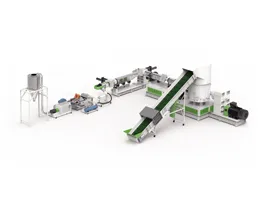
For large-scale recycling production lines, the shredder can be linked with conveyor belts, metal sorters, crushers, etc., to create a fully automated "shredding-sorting-fine crushing" process, further improving overall production efficiency and achieving large-scale, intelligent plastic recycling processing.
In conclusion, with the continuous improvement of industry standards for plastic pipe recycling and the ongoing iteration of recycling technologies, plastic pipe shredders are no longer simply material crushing equipment, but rather an "efficiency hub" in the development of the plastic circular economy. In the future, the technological upgrade of plastic pipe shredders will focus on higher intelligence, lower energy consumption, and stronger material adaptability, continuously empowering the plastic recycling industry to achieve its core goals of "reduction, reuse, and resource recovery."
For a plastic recycling manufacturer, precise selection based on its production needs and scientific operation and maintenance in accordance with equipment specifications are crucial to maximizing the production value of plastic pipe shredders, seizing development opportunities in the plastic circular economy, and achieving a dual improvement in economic and environmental benefits.

 English