With the explosive growth of new energy vehicles, energy storage power stations, and other fields, the lithium-ion battery industry has ushered in a golden period of development. At the same time, the amount of retired lithium-ion batteries and separator scraps generated during production has also surged. As one of the core components of batteries, lithium-ion battery separators are mainly made of polymer materials such as polyethylene (PE) and polypropylene (PP). If not effectively recycled, they will not only cause serious resource waste, but their non-degradable characteristics will also pose a long-term threat to the ecological environment.
Shredding and granulation, as a core and key step in lithium-ion battery separator recycling, can achieve the recycling and reuse of polymer materials, reduce enterprise production costs, and meet the requirements of the "dual-carbon" strategy, becoming an important support for the green transformation of the new energy industry.
I. Industry Background and Recycling Value of Lithium-ion Battery Separator Recycling
(I) Industry Background: Surge in Demand Creates a Rigid Need for Recycling
In recent years, the global penetration rate of new energy vehicles has continued to increase, driving the rapid growth of lithium-ion battery production, which in turn has led to a significant increase in separator waste. On the one hand, during the lithium battery production process, approximately 5%-10% of separator scrap is generated due to cutting and debugging. This scrap is mostly composed of unpolluted pure polymer materials with extremely high recycling value. On the other hand, after dismantling retired lithium batteries, the separator can be recycled after separation, avoiding resource waste. According to relevant data, the Chinese lithium battery separator market size exceeded 30 billion yuan in 2025, with an annual output of separator waste exceeding 500,000 tons, indicating huge potential in the recycling market.
Under the global trend of sustainable development, separator recycling shredding and granulation technology can not only solve environmental pollution problems but also promote the closed-loop circulation of polymer materials, becoming an inevitable choice for the high-quality development of the lithium battery industry.
(II) Recycling Value: Dual Benefits of Economy and Environmental Protection
The core components of lithium battery separators are general-purpose polymer materials such as PE and PP. After shredding and granulation, these materials can be reused in the production of low-end plastic products, modified plastics, pipes, and other products, achieving resource recycling. From an economic perspective, the unit price of recycled and granulated separator particles is far lower than that of virgin materials, significantly reducing raw material costs for downstream enterprises. For example, after recycling and granulating wet-process separator scraps, the resulting granules can be directly used in pipe and modified plastics processing, saving enterprises over 30% in raw material costs.
From an environmental perspective, separator materials have a natural degradation cycle of hundreds of years. If discarded or incinerated indiscriminately, they generate large amounts of harmful gases and solid waste, polluting soil, water, and air. Shredding and granulation technology allows for 100% recycling of separator waste, reducing resource consumption and environmental pollution, aligning with global green and low-carbon development principles. Furthermore, for lithium battery manufacturers, independently developing separator scrap recycling and granulation processes can reduce waste disposal costs and enhance their green competitiveness.
II. Selection Guide for Lithium Battery Separator Recycling Shredding and Granulation
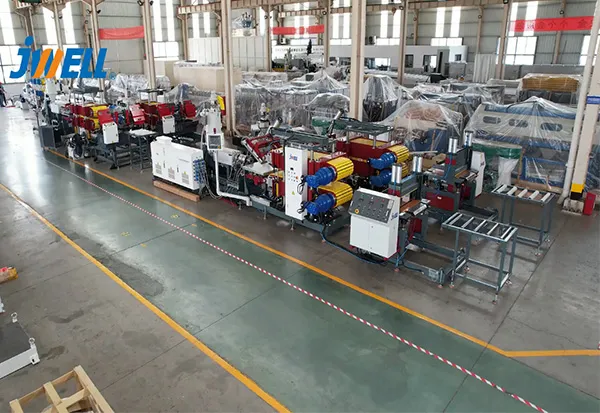
Equipment is crucial for ensuring the stable and efficient operation of the shredding and granulation process. Scientific selection requires consideration of factors such as separator type (dry film/oil film), processing capacity, and product quality requirements. JWELL Company can provide customized equipment configurations. Key points for equipment selection are as follows:
(I) Core Equipment Selection
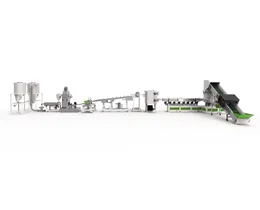
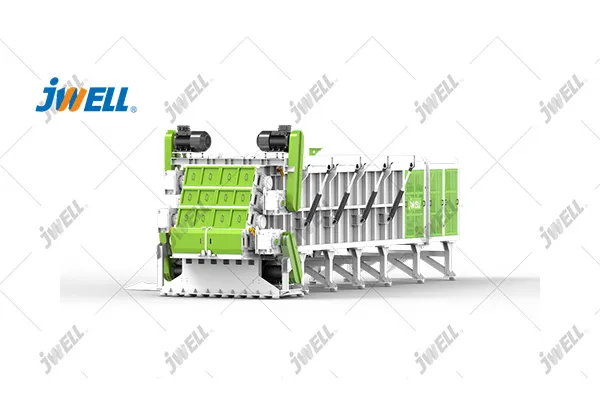
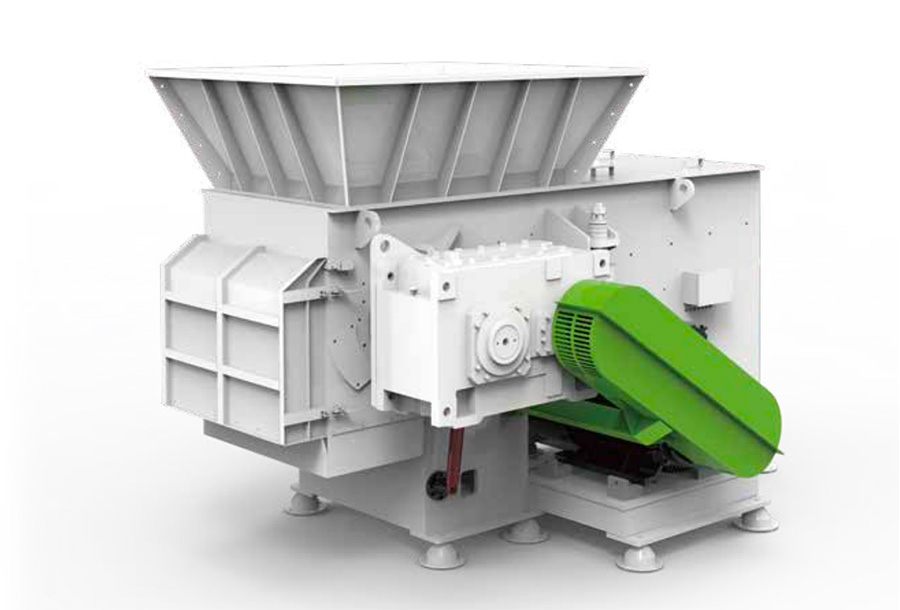
1. Shredding Equipment: Two-stage configuration to adapt to different shredding needs. For primary shredding, a single-shaft shredder machine is preferred. Suitable for processing large pieces of diaphragm, whole rolls of diaphragm, or oil-containing diaphragm, it has advantages such as strong shearing force, low energy consumption, and less likelihood of material jamming. Different specifications can be selected according to the processing capacity. The standard processing capacity is 0.5-1 t/h, and the maximum capacity is over 1 t/h. Different screen sizes are required for dry film and oil film. Pay close attention to the blade material and rotation speed to ensure uniform material size after shredding and avoid adhesion and clumping.
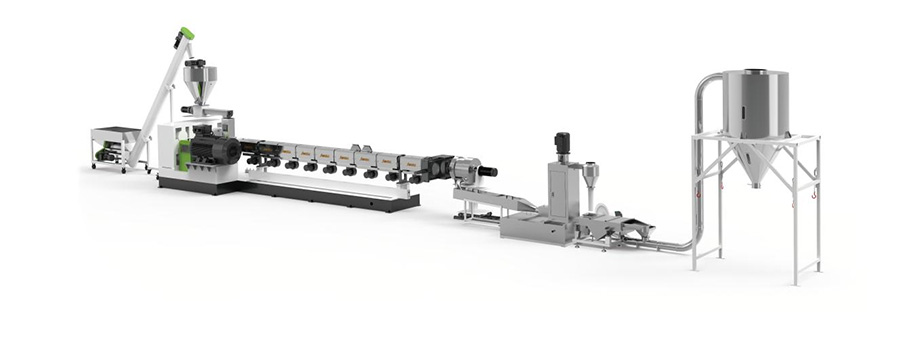
2. Extrusion Granulation Equipment: Single-screw extruder.
A special screw design is required to accommodate both oil film and dry film material states. Because melted oil film tends to stick inside the screw barrel, reducing its fluidity, the screw's length-to-diameter ratio, rotational speed range, and temperature control accuracy must be considered during selection to ensure stable equipment operation. Equipped with a plate screen changer and a water ring pelletizing system to ensure product quality.
3. Auxiliary Equipment: Indispensable, Enhancing Process Stability
Auxiliary equipment includes dryers, vibrating screens, compactors, and nitrogen protection systems. Dryers must be selected with precise temperature control and high drying efficiency to ensure effective pellet drying. Vibrating screens use a multi-layer screening structure to accurately screen particles of different sizes. For oil-containing diaphragms, a compactor is required to achieve oil separation and material compaction, improving feed stability. For decommissioned diaphragm recycling, a nitrogen protection system can be installed to control the oxygen content in the crushing chamber at 1%-2%, eliminating the risk of dust explosions and combustion.
(II) Equipment Selection Considerations
1. Adaptability: Select equipment according to the diaphragm type. For processing oil-containing diaphragms, focus on the equipment's oil separation capability and corrosion resistance. For processing dry diaphragms, simplified pretreatment equipment can reduce costs.
2. Safety: Since diaphragms are flammable materials and oil-containing diaphragms may contain residual electrolyte, the equipment must be equipped with overload protection, temperature monitoring, emergency shutdown, and fire extinguishing devices. A nitrogen protection system can effectively improve the safety of decommissioned diaphragm recycling.
3. Efficiency and Energy Consumption: Select equipment with a processing capacity that matches your needs to avoid idle equipment or insufficient capacity. Prioritize equipment with low energy consumption and high automation, such as fully automated control systems, which can achieve one-button start/stop and intelligent fault alarms, reducing labor costs and improving production efficiency.
III. Industry Development Prospects and Future Trends
(I) Development Prospects: Driven by both policy and market, with huge potential
1. Continuous release of policy dividends: The in-depth implementation of China's "dual-carbon" strategy and the green transformation needs of new energy vehicles and energy storage industries will further promote the development of the diaphragm recycling industry; the tightening of environmental protection policies in various regions will force companies to strengthen the recycling and treatment of diaphragm waste, providing policy support for the promotion of shredding and granulation technology.
2. Continued Market Demand Growth: With the continuous increase in lithium battery production, the output of waste separators will rise year by year, and the market demand for recycling and granulation will grow accordingly. At the same time, recycled granules have a significant cost advantage and will gradually replace some virgin materials, expanding application scenarios and creating a vast market space.
3. Continuous Technological Upgrading: With the continuous accumulation of industry technology, pretreatment processes, shredding and granulation equipment, and modification technologies will be continuously optimized, leading to continuous improvement in the recovery rate and product quality of separator recycling, driving the industry towards high-quality development.
(II) Future Trends
1. Intelligent Processes: Introducing technologies such as the Internet of Things, big data, and 5G will enable intelligent control of the entire shredding and granulation process, real-time monitoring of equipment operating status, material purity, product quality, and other parameters, and automatic adjustment of process parameters to improve production efficiency and product stability.
2. Integrated Equipment: In the future, integrated production lines of "pretreatment—shredding—crushing—granulation—post-processing" will be gradually launched, reducing equipment footprint, lowering labor costs, improving process continuity and stability, and adapting to the needs of large-scale production.
3. Product Value Enhancement: Improving the performance of recycled particles through modification technologies expands their applications in mid-to-high-end fields, such as the production of lithium battery separator substrates and automotive interior parts, thereby increasing product added value and improving corporate profit margins.
4. Industry Scale and Concentration: With the improvement of the recycling system and the reduction of equipment costs, a number of large-scale, professional separator recycling companies will emerge, gradually increasing industry concentration and driving the separator recycling industry towards standardization and industrialization.
IV. Conclusion
Lithium battery separator recycling, shredding, and granulation is an important measure to achieve a green cycle in the new energy industry and promote the implementation of the "dual-carbon" strategy. It solves the environmental pollution problem of separator waste and realizes the resource reuse of polymer materials, combining economic, environmental, and social benefits. Currently, although the separator recycling, shredding, and granulation industry faces pain points such as high pre-treatment difficulty, high equipment investment, and an imperfect recycling system, its development prospects are broad under the joint impetus of policy, technological upgrades, and market demand.
In the future, with continuous technological optimization, equipment upgrades, and the improvement of the recycling system, lithium battery separator recycling shredding and granulation technology will gradually move towards intelligent, large-scale, and high-value production, injecting new impetus into the sustainable development of the new energy industry. For industry practitioners, it is necessary to seize development opportunities, increase investment in technological research and development, optimize process solutions, improve equipment configuration, promote the high-quality development of the separator recycling industry, and jointly build a green and circular ecosystem for the new energy industry.

 English