Polyetheretherketone (PEEK) is a high-performance specialty engineering plastic. With its excellent high-temperature resistance, chemical corrosion resistance, superior mechanical properties, low coefficient of friction, and high wear resistance, it is widely used in aerospace, medical devices, automotive industry, electronics, and other high-end fields, making it an ideal material for manufacturing components in extreme environments.
1. Overview of PEEK Materials
1.1 Definition and Chemical Structure
Polyetheretherketone (PEEK) is a semi-crystalline aromatic polymer and a high-performance specialty engineering plastic. Its chemical structure consists of repeating ether bonds and alternating ketone groups, with benzene rings embedded in the molecular chain. This unique molecular structure endows PEEK with excellent comprehensive properties—the benzene rings ensure good thermal and chemical stability, while the ether bonds and ketone groups provide excellent flexibility and mechanical strength. The molecular formula of PEEK is: -O-C₆H₄-C-(O)-C₆H₄-C(O)-n.
1.2 Development History
The development of PEEK materials began in the 1970s. Imperial Chemical Industries (ICI) in the UK successfully synthesized the material for the first time in 1978, and commercial mass production was achieved in 1982. Initially, due to its core advantages of high temperature resistance, corrosion resistance, and high strength, PEEK was mainly used in the aerospace field to replace traditional metal materials, effectively reducing aircraft weight and improving equipment performance. With continuous iteration of production technology and cost reduction, its application scope has gradually expanded to multiple industries such as automotive, electronics, medical, and machinery, becoming one of the core materials in high-end engineering fields.
2. Performance Characteristics of PEEK Materials
2.1 Excellent Mechanical Properties
PEEK materials possess outstanding mechanical properties, capable of meeting the needs of various complex engineering scenarios. Its core advantages are reflected in the following aspects:
High Strength and High Modulus: Tensile strength can reach over 100 MPa, and flexural modulus is as high as 3.5 GPa. It can withstand high mechanical loads and maintain structural integrity even under extreme conditions, making it a viable alternative to some metal materials.
•Good Toughness and Impact Resistance:With an elongation at break of approximately 20%, PEEK exhibits excellent toughness and its impact resistance does not significantly decrease at low temperatures, effectively resisting external impacts. It is suitable for applications requiring high impact resistance, such as aerospace and automotive.
•Excellent Wear Resistance:** Under high load and high-frequency friction conditions, PEEK shows extremely low wear rate. For example, in automotive transmission gears, its wear is only 1/10 that of traditional metal materials, significantly extending component lifespan and reducing maintenance costs.
2.2 Outstanding Heat Resistance:** Heat resistance is a core advantage of PEEK materials, enabling them to operate stably for extended periods in high-temperature environments, adapting to various high-temperature conditions:
•High Glass Transition Temperature and Melting Point:With a glass transition temperature of approximately 143℃ and a melting point as high as 343℃, it maintains good mechanical properties and dimensional stability even at high temperatures, without softening or deformation.
•Excellent Thermal Stability:After 1000 hours of continuous use at 200℃, its performance shows no significant decline, meeting the long-term usage requirements of high-temperature components in aerospace, electronics, and other fields. • Excellent heat oxidation resistance: The oxidation induction time (OIT) can reach several hours, far exceeding that of other engineering plastics. It effectively resists oxidation in high-temperature air, further extending the material's service life.
2.3 Excellent chemical corrosion resistance: PEEK materials exhibit strong resistance to a variety of chemicals, enabling long-term stable use in complex chemical environments. Specifically:
• Acid and alkali corrosion resistance: It has excellent resistance to most inorganic acids and alkalis. For example, after immersion in a 10% concentration of hydrochloric acid and sodium hydroxide solution for 1000 hours, the mass change rate is only 0.5%, making it a suitable replacement for metal materials in the manufacture of pipes, valves, and other components in the chemical industry.
•Organic solvent corrosion resistance: It exhibits excellent resistance to common organic solvents such as toluene and ethanol. After immersion in toluene for 7 days, the mechanical properties retention rate can still reach over 90%, making it suitable for the manufacture of related components in the electronics and pharmaceutical industries. • Hydrolysis Resistance: PEEK exhibits excellent stability in high-temperature water environments. After immersion in hot water for 1000 hours, the tensile strength retention rate reaches 80%, meeting the requirements for use in medical equipment, food processing, and other fields.
3. Extrusion Molding and Applications of PEEK Materials
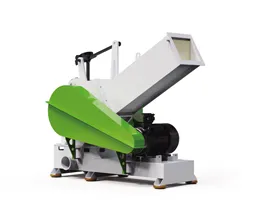
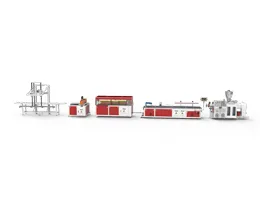
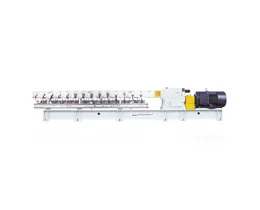
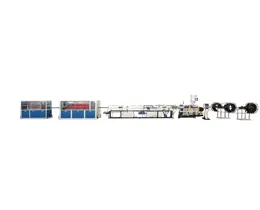
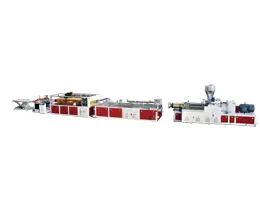
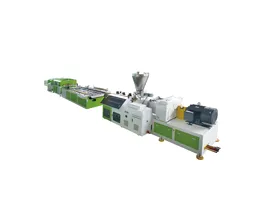
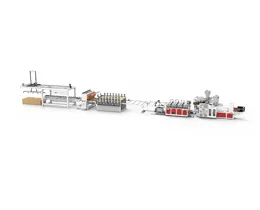
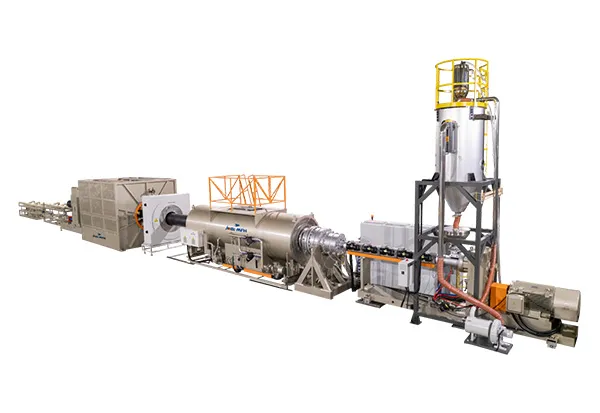
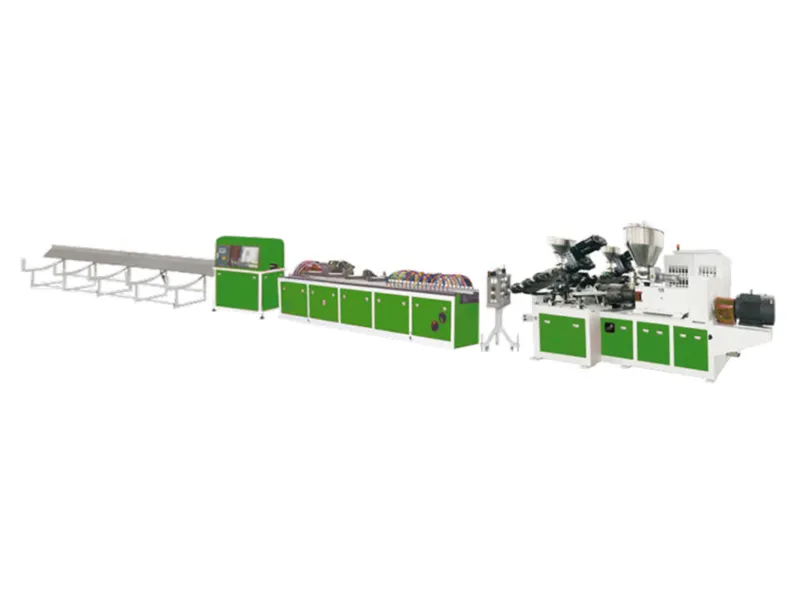
The extrusion molding process for PEEK materials is mainly used to produce continuous products such as pipes, sheets, and films. It offers advantages such as high production efficiency and good product consistency. Key processing points and applications are as follows:
•Processing Parameters: The extrusion molding temperature is typically controlled between 340℃ and 380℃. This temperature range ensures good material flowability and molding performance. The extrusion speed is relatively fast; for example, when producing PEEK pipes, the extrusion speed can reach 10 meters per minute, meeting the needs of large-scale mass production.
•Product Performance: PEEK pipes and sheets produced through extrusion molding retain the material's excellent mechanical properties and chemical corrosion resistance. For example, the tensile strength of PEEK pipes can reach 120 MPa, making them suitable for conveying corrosive media such as strong acids and alkalis.
•Die Design: The design of the extrusion die directly affects product quality. For example, pipe extrusion dies require precise control of the dimensions and gaps of the die head and core die to ensure uniform pipe wall thickness and accurate dimensions.
•Typical Applications: In the electronics field, PEEK film, with its excellent insulation and high-temperature resistance, is used as an insulating layer in electronic devices such as flexible circuit boards. It can withstand operating temperatures up to 200℃ while maintaining excellent electrical insulation performance.
4. Main Application Areas of PEEK Materials
4.1 Aerospace Field
PEEK materials occupy an irreplaceable position in the aerospace field due to their advantages such as lightweight, high-temperature resistance, and corrosion resistance. Its core application value is reflected in:
• Lightweight and High Performance: With a density of only 1.3 g/cm³, far lower than traditional metal materials, while its mechanical strength and modulus are comparable to metals. For example, in manufacturing aircraft engine blades, it can reduce weight by 30% without compromising strength, effectively improving aircraft fuel efficiency and reducing operating costs.
• High Temperature Resistance and Stability: Suitable for high-temperature operating conditions in the aerospace field. After 1000 hours of continuous use at 200℃, performance degradation does not exceed 5%, making it suitable for manufacturing high-temperature components for aircraft engines.
• Corrosion Resistance and Hydrolysis Resistance: Capable of withstanding complex environments such as chemicals and water vapor during flight. After immersion in hot water for 1000 hours, tensile strength retention reaches 80%, making it widely used in aircraft hydraulic and fuel systems.
• Application Examples: In the Boeing 787 aircraft, PEEK materials are widely used in key components such as engine blades, wing skin, and fuselage structural parts, accounting for 20% of the application, significantly improving aircraft performance and safety.
4.2 Medical Device Field Due to its excellent biocompatibility, corrosion resistance, and mechanical properties, PEEK materials are increasingly widely used in the medical device field, specifically:
• Biocompatibility: Non-irritating and non-toxic to human tissues, with a cytotoxicity level of 1. It can be well-compatible with tissues and cells in the human body without causing adverse reactions such as inflammation. • Corrosion Resistance and Mechanical Properties: PEEK can withstand the environments of bodily fluids and chemical disinfectants encountered during medical device use. Its high strength and high modulus allow it to withstand mechanical loads within the human body, meeting long-term usage requirements.
•Application Examples: Widely used in the manufacture of artificial joints, spinal implants, dental implants, and other medical devices. Globally, over 1000 tons of PEEK material are used annually for medical implants, and this figure is increasing year by year. PEEK artificial hip joints, in particular, have a clinical lifespan of over 20 years.
4.3 Automotive Manufacturing Sector
PEEK material, with its advantages of high-temperature resistance, wear resistance, and lightweight design, has become a high-end material choice in the automotive manufacturing sector. Its main applications include:
•High Temperature Resistance and Wear Resistance: Suitable for the working environment of high-temperature components such as engines and transmissions, with extremely low wear rates. For example, in transmission gear applications, the wear rate is only 1/10 that of traditional metal materials.
•Lightweight Design and Energy Saving: Facilitates lightweight automotive design, effectively improving fuel efficiency and reducing emissions, aligning with the automotive industry's trend towards energy conservation and emission reduction.
• Application Examples: Widely used in engine components, transmission gears, sensor housings, braking system components (brake discs, brake pads), etc. For example, the PEEK engine sensor housing produced by a certain automobile manufacturer can operate stably in high temperature and high load environments, with a service life of more than 10 years, significantly improving the performance and service life of the braking system.
We use cookies to offer you a better browsing experience, analyze site traffic and personalize content. Part of the tracking is necessary to ensure SEO effectiveness, By using this site, you agree to our use of cookies.
Visit our cookie policy to learn more.

 English