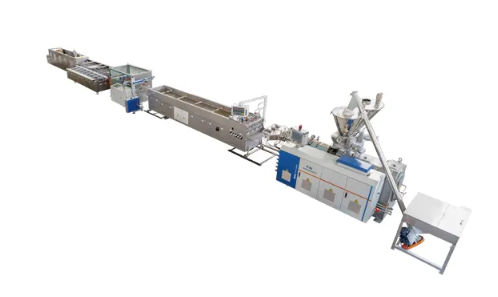
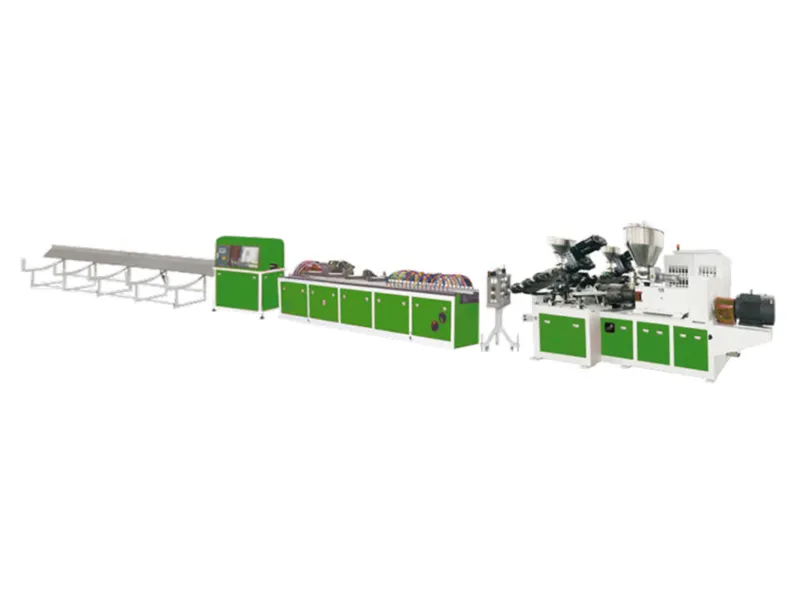
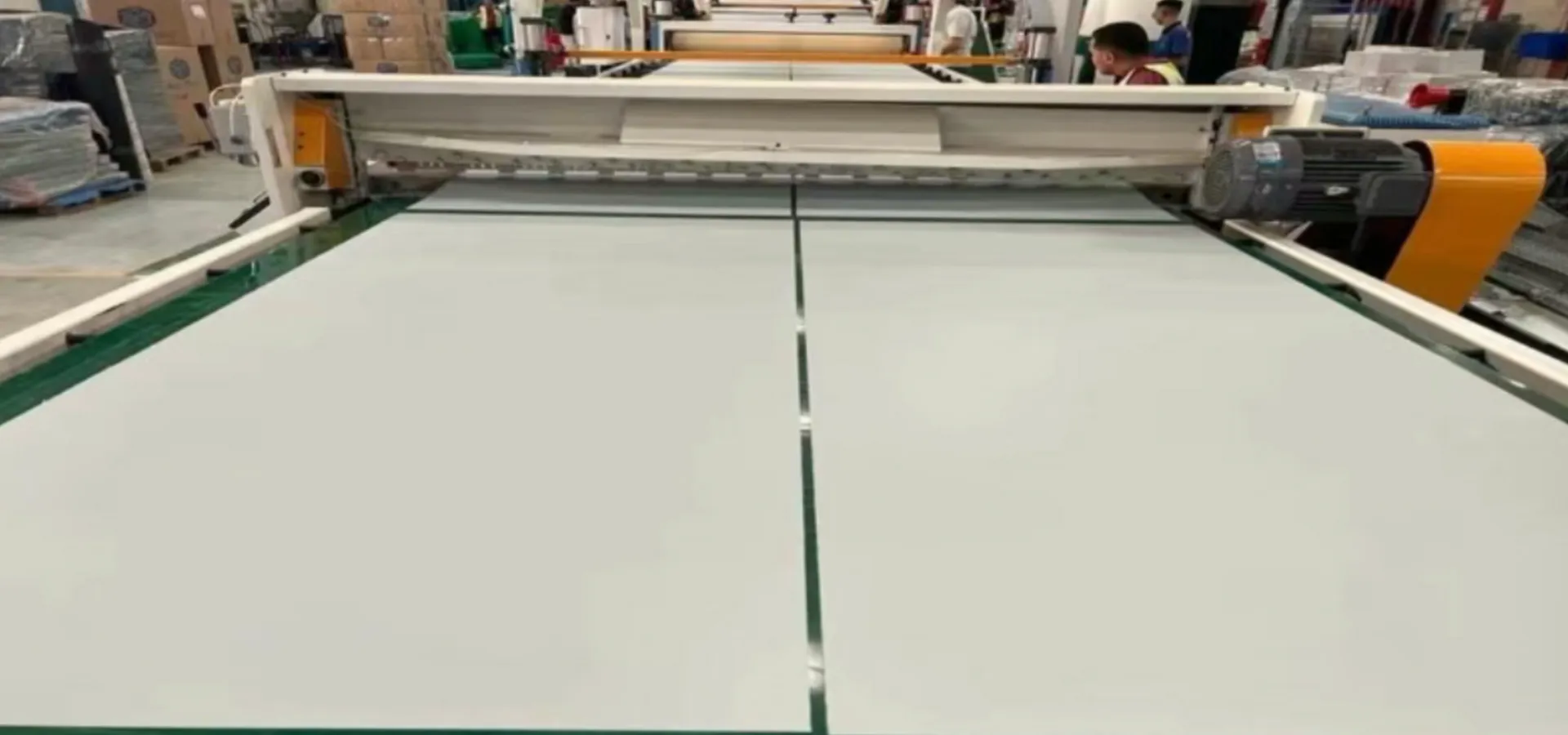
Have you ever wondered how the plumbing pipes in our homes or the sewage mains running beneath our cities transform from bags of white PVC powder into smooth, durable, and corrosion-resistant finished products? Behind this everyday miracle lies the PVC Pipe Extruder Machine—a sophisticated piece of engineering that converts raw materials into the essential piping we rely on, through a precisely automated process.
Unlike many common plastics, PVC has an exceptionally narrow processing window. A slight temperature deviation can cause degradation, while inadequate mixing compromises mechanical performance. This is precisely why professional pipe manufacturing depends on a well-engineered PVC Pipe Extruder Machine. It delivers meticulous control over temperature, shear, and material conveyance at every stage, allowing the raw material to undergo its transformation under consistently stable conditions.
From raw material intake to finished product output, the entire process operates in a continuous, tightly interlinked sequence. A high-quality PVC Pipe Extruder Machine is more than just production equipment; it is the core asset that guarantees pipe quality, boosts throughput, and lowers operational costs. Let us walk you through the efficient PVC extrusion process, step by step, to see how stable production is achieved.
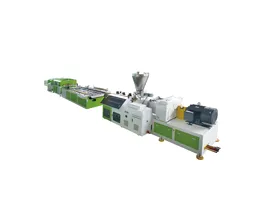
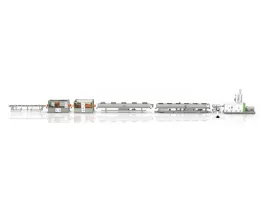
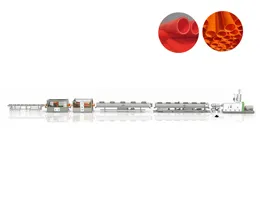
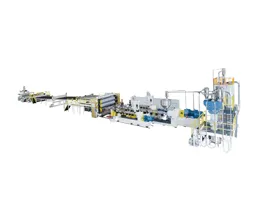
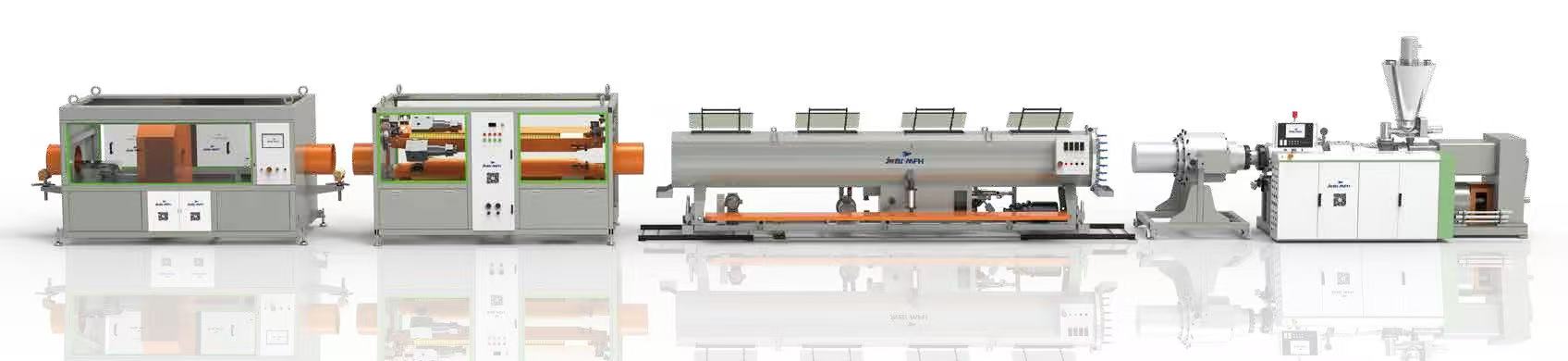
A complete automated production line built around a PVC Pipe Extruder Machine comprises the following eight critical stages, all working in concert to ensure stable, efficient, and high-quality pipe output.
Raw Material Preparation
Rigid PVC typically uses a dry blend consisting of PVC resin powder, stabilizers, lubricants, fillers, and other additives, which are pre-mixed uniformly in a high-speed mixer. Flexible PVC, on the other hand, often utilizes ready-to-use pellets or pre-compounded mixtures. A well-designed formulation ensures smooth feeding into the PVC Pipe Extruder Machine, minimizes the risk of degradation, and guarantees the final mechanical properties of the pipe.
Feeding
The prepared dry blend or PVC pellets are fed consistently into the hopper of the PVC Pipe Extruder Machine. The hopper, often equipped with a metering or twin-screw feeder, delivers the material into the extruder barrel at a precisely controlled rate. This ensures a stable and accurate material supply, which is fundamental to output consistency.
Melting & Mixing
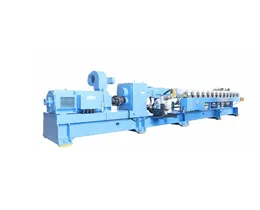
Inside the PVC Pipe Extruder Machine, rotating screws convey the material forward along the barrel. Heaters surrounding the barrel provide the thermal energy needed to melt the PVC. For most PVC pipe applications, a twin-screw extruder, particularly the conical twin-screw design, offers significant advantages. It achieves intensive mixing at relatively low screw speeds, ensures uniform melting, minimizes thermal degradation, and disperses pigments, fillers, and modifiers more effectively than single-screw alternatives. As the material progresses, it is compressed and sheared, transforming into a homogeneous, high-temperature melt.
Forming (Die Extrusion)
The molten PVC is then forced through a custom-designed die that shapes it into a pipe. PVC pipe extrusion lines utilize an annular die, which forms the molten material into a continuous tubular shape. At this stage, the extruded tube is still in a hot, semi-molten state and requires immediate support and sizing to maintain its form.
Calibration & Cooling
Immediately after exiting the die, the hot tube enters a calibration unit, typically a vacuum sizing tank. Here, a combination of vacuum and water spray precisely forms the pipe to its final diameter and ensures dimensional accuracy and roundness. Following calibration, the pipe travels through a series of cooling baths or spray chambers where it is gradually solidified. Proper cooling is crucial for the PVC Pipe Extruder Machine line to deliver finished pipes with perfect roundness, free from deformation or warping.
Haul-Off
A haul-off unit, equipped with either belts or caterpillar tracks, gently and continuously pulls the solidified PVC pipe away from the cooling section at a consistent speed. This speed must be perfectly synchronized with the extruder output to maintain uniform wall thickness and prevent the pipe from being stretched or compressed. Stable haul-off is essential for ensuring consistent cross-section along the entire pipe length.
Cutting / Winding
Depending on the final product application, the continuous pipe is either automatically cut into specified lengths using a saw or rotary cutter (for rigid pipes), or wound into coils (for flexible pipes). The cutting mechanism must be precisely timed with the extrusion and haul-off speeds to ensure clean, square cuts without damaging the pipe ends.
Quality Check
While not a mechanical process step in the same sense, continuous quality monitoring is integral to modern production. This involves in-line dimensional gauging, surface inspection, and periodic sampling for pressure testing or mechanical property verification. These checks ensure every pipe produced meets stringent industry standards and customer specifications.
In Summary
A well-configured PVC Pipe Extruder Machine with precise controls enables a continuous, stable, and highly efficient PVC extrusion process. This translates directly to increased production capacity and reduced manufacturing costs. JWELL's PVC pipe extrusion lines are versatile solutions suitable for various applications, including building plumbing, municipal sewage, and electrical conduit, making them the ideal choice for large-scale PVC pipe production.

 English