Building or expanding an HDPE pipe factory requires more than purchasing an extrusion line. The equipment must match the intended pipe applications, diameter range, output target, utility conditions, quality standards, and future production plans.
A line designed for small water-supply pipes may not be suitable for large-diameter drainage or pressure pipes. Selecting the wrong configuration can result in limited production flexibility, excessive energy use, unstable output, or unnecessary investment.
Before requesting a quotation for an HDPE pipe making machine, manufacturers should prepare a clear production plan covering products, capacity, factory space, utilities, automation, and operator requirements.
Define the HDPE Pipe Products
The first step is to determine which pipes the factory will manufacture. HDPE pipes are commonly used for water supply, drainage, irrigation, mining, cable protection, municipal infrastructure, and industrial fluid transport.
Different applications may require different diameters, wall thicknesses, pressure ratings, colors, markings, and testing standards. Buyers should confirm:
Pipe application and applicable standard
Minimum and maximum outer diameter
SDR series or wall-thickness range
Material grade and formulation
Pipe color and marking requirements
Straight-length or coiling requirements
Expected annual production volume
A factory serving several markets should also decide whether one line can efficiently cover the required specifications or whether multiple production lines are more practical.
Determine Diameter Range and Output
Pipe diameter directly affects the extruder size, die design, cooling length, haul-off capacity, cutting equipment, and factory layout.
Small-diameter lines usually operate at higher linear speeds and may include automatic coilers. Large-diameter lines require stronger downstream equipment, longer cooling sections, and more space for pipe handling.
When selecting an HDPE pipe making machine, buyers should not focus only on the maximum output shown in a specification table. Actual capacity depends on pipe diameter, wall thickness, raw material, line speed, and operating conditions.
A realistic capacity calculation should consider:
Average product mix
Daily operating hours
Production days per year
Changeover frequency
Maintenance downtime
Startup waste
Expected sales growth
A high-output line may not provide a good return if the market mainly requires small orders and frequent product changes.
Main Components of an HDPE Pipe Production Line
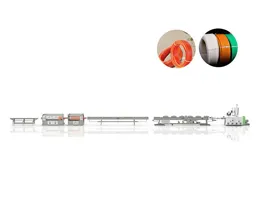
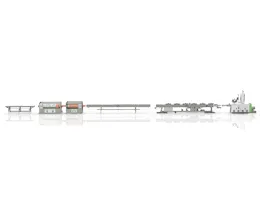
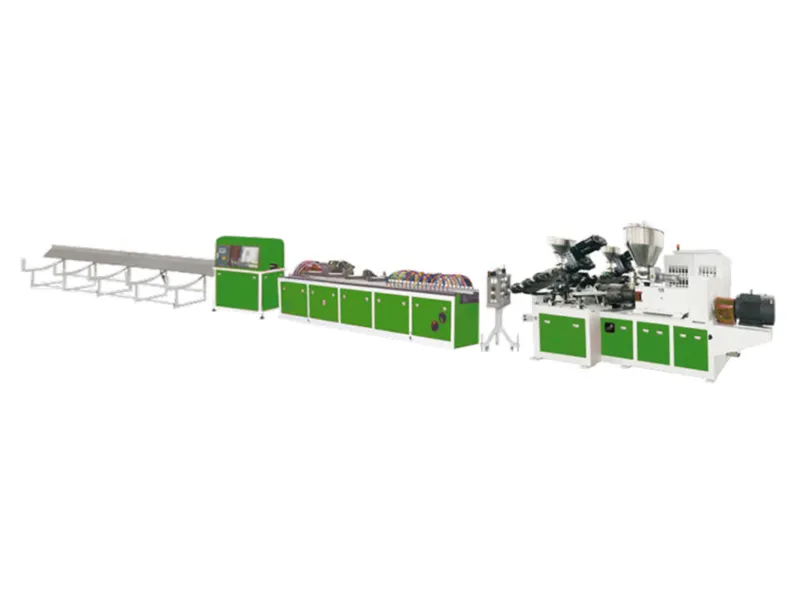
A complete HDPE pipe line contains several coordinated units.
Material Feeding System
The feeding system supplies HDPE resin, color masterbatch, and approved additives to the extruder. Stable material feeding is necessary for consistent output and pipe dimensions.
Single-Screw Extruder
The extruder melts, mixes, and pressurizes the HDPE material. Screw design, motor power, temperature control, and drive stability affect plasticizing quality and production capacity.
The extruder should be selected according to the pipe diameter, wall thickness, material formulation, and output target.
Die Head
The die head forms the molten material into a tubular shape. Uniform melt distribution is important for maintaining consistent wall thickness around the pipe.
Buyers should confirm which dies, mandrels, heaters, and calibration sleeves are included in the quotation.
Vacuum Calibration and Cooling
The pipe enters a vacuum calibration tank after extrusion, where its outer diameter is stabilized. Additional cooling tanks remove heat before traction and cutting.
Large or thick-walled pipes normally require longer cooling sections.
Haul-Off and Cutting Units
The haul-off unit pulls the pipe through the line at a controlled speed. Its speed must remain synchronized with the extruder output to maintain pipe dimensions. Finished pipes may be cut into straight lengths or wound into coils, depending on their diameter and application.
Plan the Factory Layout
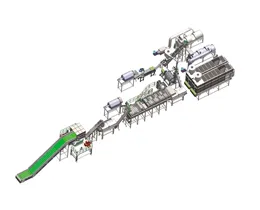
Factory layout should be prepared before the equipment order is finalized. The required workshop length depends on the pipe diameter, cooling system, cutting method, and finished-product handling process.
Space should be reserved for:
Raw-material storage
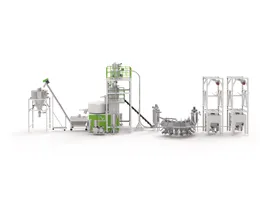
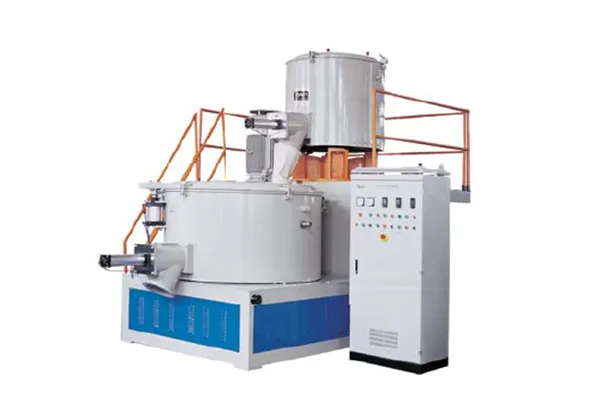
Material mixing and conveying
Extrusion and cooling equipment
Haul-off and cutting units
Coiling or pipe stacking
Quality inspection
Die and tool storage
Maintenance access
Finished-product storage
The line should not be installed too close to walls or other equipment. Operators need sufficient space for die changes, tank cleaning, motor servicing, and product removal. For large-diameter pipes, the factory must also plan suitable lifting, transportation, and storage equipment.
Prepare Electricity, Water, and Compressed Air
Stable utilities are essential for continuous production.
The total electrical load includes the extruder motor, heaters, vacuum pumps, cooling pumps, haul-off drives, cutters, feeders, compressors, and other auxiliary units.
Cooling-water preparation is equally important because water temperature and flow affect calibration, cooling efficiency, pipe dimensions, and production speed.
A factory may require:
Compressed air may be used for pneumatic components, cutting systems, or other auxiliary functions. Buyers should request detailed utility requirements before completing the factory infrastructure.
Evaluate Automation and Labor Needs
Modern HDPE pipe lines use coordinated control systems for temperature, extrusion speed, vacuum, haul-off speed, cutting length, and alarms.
Useful automation functions include:
Production recipe storage
Temperature monitoring
Extruder and haul-off speed control
Motor-load and pressure monitoring
Automatic length setting
Alarm and fault display
Production data recording
Automation can improve consistency and reduce manual adjustment, but trained operators are still required.
Factory personnel may be needed for line operation, material preparation, quality inspection, packaging, mechanical maintenance, and electrical maintenance. Large-diameter production may also require additional handling staff.
Operator training should cover startup, shutdown, die adjustment, recipe changes, quality inspection, troubleshooting, and emergency procedures.
Information to Include in an Equipment Inquiry
A detailed inquiry helps the supplier recommend the correct machine configuration and prepare an accurate quotation.
Buyers should provide:
Pipe application and standard
Diameter and wall-thickness range
Required output
Raw-material grade
Number of pipe layers
Color and marking requirements
Cutting or coiling requirements
Local voltage and frequency
Workshop dimensions
Destination country
Required auxiliary equipment
Expected commissioning date
The supplier should confirm the production range, expected output, installed power, water consumption, equipment dimensions, delivery schedule, commissioning service, warranty, and spare-parts package.
Frequently Asked Questions
Can one production line manufacture every HDPE pipe diameter?
No. Each line has a defined diameter range based on the extruder, die head, calibration system, cooling capacity, haul-off unit, and cutter. Factories covering a wide product range may need more than one line.
How much factory space is required?
The required space depends on pipe diameter, cooling length, cutting method, auxiliary equipment, and finished-pipe storage. Large-diameter production generally requires a longer workshop.
Should equipment be selected by maximum output?
Maximum output is only one reference. Buyers should also consider normal product specifications, energy consumption, production stability, changeover frequency, and actual market demand.
What auxiliary equipment is commonly required?
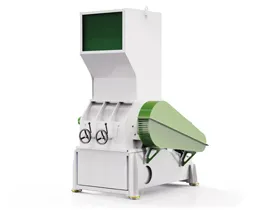
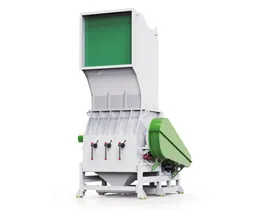
Common auxiliary equipment includes feeders, mixers, conveying systems, chillers or cooling towers, air compressors, printers, crushers, testing equipment, and pipe-handling devices.
Conclusion
Planning an HDPE pipe factory requires coordinated decisions about products, diameter range, capacity, utilities, floor space, automation, labor, and quality control. Equipment should be selected according to realistic production demand rather than maximum technical specifications alone.
JWELL provides HDPE pipe extrusion solutions for different pipe diameters and production requirements. By supplying detailed project information, buyers can obtain a more suitable line configuration and reduce unnecessary changes during installation and commissioning.

 English