Selecting the right HDPE pipe production configuration requires more than comparing output and pipe diameter. Manufacturers must also decide whether their target market needs a conventional single-layer pipe or a multi-layer product with different materials or functional structures.
A single-layer HDPE extrusion line is often sufficient for standard water supply, drainage, irrigation, and industrial piping. A multi-layer line, however, can combine several material layers to support specific performance, appearance, or cost-control objectives.
Neither configuration is automatically better. The right choice depends on pipe standards, applications, material strategy, production volume, technical capability, and expected return on investment.
How Does a Single-Layer HDPE Extrusion Line Work?
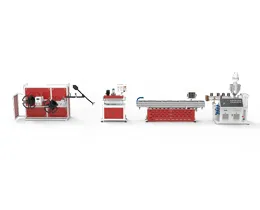
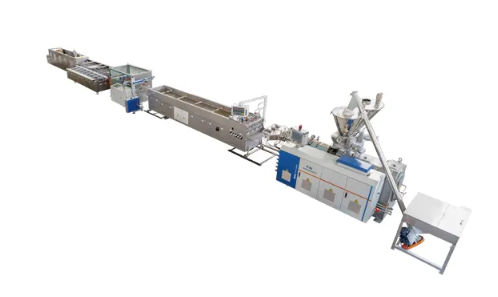
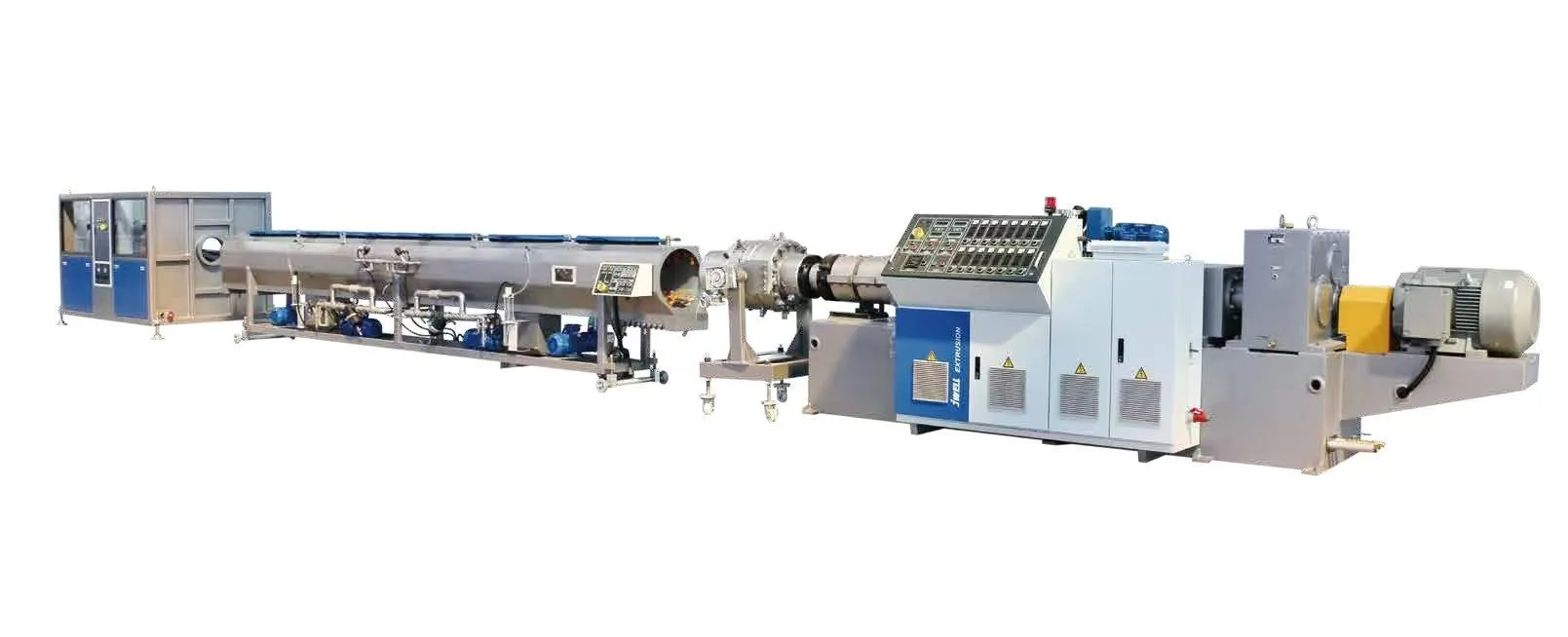
A single-layer production line uses one primary extruder to melt and deliver the HDPE material to the die head. The molten polymer is formed into a pipe, calibrated under vacuum, cooled, pulled at a controlled speed, and cut or coiled according to the product specification.
A typical line includes:
Material feeding and mixing equipment
Single-screw extruder
Pipe die head
Vacuum calibration tank
Spray cooling tanks
Haul-off unit
Cutting machine or coiler
Printing and control equipment
This configuration is suitable when the complete pipe wall uses one main formulation. Color masterbatch, stabilizers, or other approved additives can be blended with the base resin before extrusion.
Single-layer production is generally easier to set up and control because only one primary melt stream must be coordinated. Product changeovers, die adjustment, temperature control, and operator training may also be more straightforward.
What Is a Multi-Layer HDPE Pipe Extrusion Line?
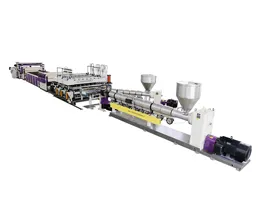
A multi-layer HDPE extrusion line uses two or more extruders to feed different polymer streams into a specially designed co-extrusion die. These materials form separate but bonded layers within the pipe wall.
Depending on the product design, a pipe may contain:
JWELL’s MFH series multi-layer HDPE water-supply and drainage pipe line can use multiple extruders with synchronized speed control. Optional meter-weight control systems and centralized PLC control help manage the output of each extruder. Its multi-layer spiral die is designed according to the required layer number and thickness ratio to support more uniform layer distribution.
A multi-layer line therefore requires more precise coordination than a single-layer system. Extruder output, melt temperature, material compatibility, die flow, haul-off speed, and layer ratios must remain stable throughout production.
Key Differences Between Single-Layer and Multi-Layer Production
| Comparison | Single-Layer Line | Multi-Layer Line |
|---|
| Main extruders | Usually one | Two or more |
| Pipe structure | One main material layer | Several bonded layers |
| Initial investment | Relatively lower | Relatively higher |
| Process control | Simpler | More demanding |
| Material management | One main formulation | Multiple formulations |
| Product flexibility | Standard pipe structures | Functional or differentiated structures |
| Die design | Conventional pipe die | Multi-channel co-extrusion die |
| Operator requirements | Standard extrusion skills | Stronger co-extrusion control skills |
The single-layer option is often suitable for manufacturers producing established pipe specifications with stable formulations. The multi-layer option is more relevant when buyers require a specific layer structure or when the manufacturer wants to develop differentiated products.
When Is Multi-Layer Co-Extrusion Worth the Investment?
A multi-layer line may be worth considering when the additional layers provide a clear technical or commercial purpose.
Product Differentiation
A colored outer layer can help distinguish a pipe series, identify an application, or meet market appearance requirements without changing the entire pipe formulation.
Functional Surface Requirements
The inner or outer layer may be designed for a particular surface characteristic, provided the material combination complies with the required product standard.
Material Cost Management
A manufacturer may use a higher-value formulation only where it provides the greatest benefit, while the main structural layer uses the material required for strength and dimensional performance.
This approach should not be treated simply as a way to use cheaper raw materials. Pipe strength, pressure performance, long-term reliability, bonding between layers, and regulatory compliance must remain the priority.
Expansion into New Markets
Multi-layer capability may allow an established pipe factory to enter specialized market segments without replacing its complete production system. However, expected demand should justify the additional extruders, die tooling, controls, maintenance, and quality-testing requirements.
How Layer Design Affects Pipe Performance and Cost
The number of layers alone does not determine pipe quality. The function, material, and thickness of each layer must be defined according to the intended application.
Important design questions include:
What is the purpose of each layer?
Which layer provides the main structural strength?
Are the selected materials compatible during co-extrusion?
What thickness ratio is required?
How will layer uniformity be monitored?
Does the finished pipe meet the applicable standard?
Can the pipe be welded or joined using the intended method?
An excessively thin functional layer may not provide the expected benefit, while an unnecessarily thick layer can increase material cost. The production line must therefore maintain the specified layer ratio across different pipe diameters and operating speeds.
The multi-layer JWELL configuration uses a spiral die with flow channels designed around the number and proportion of layers. This arrangement is intended to support uniform distribution through the pipe wall.
Production Challenges in Multi-Layer Extrusion
Operating a multi-layer HDPE pipe extrusion line introduces several additional control points.
Extruder Synchronization
Each extruder must supply a stable amount of material. A fluctuation in one unit can change the layer ratio even when the overall pipe dimensions appear acceptable.
Temperature Coordination
Different material streams may require carefully coordinated processing temperatures. Large temperature differences can affect melt flow, layer bonding, and die stability.
Material Compatibility
Materials should form a reliable bond during extrusion. Incompatible formulations may separate during testing, installation, or long-term service.
Die Adjustment
The co-extrusion die must distribute each melt stream evenly around the full circumference. Incorrect adjustment may create uneven layers or localized thickness differences.
Quality Inspection
Standard dimensional checks may not be enough. Manufacturers may also need to verify individual layer thickness, bonding quality, surface consistency, and product performance.
Because of these requirements, multi-layer production depends on both capable equipment and disciplined process management.
How to Choose the Right Line Configuration
A single-layer HDPE extrusion line is generally the practical choice when:
The factory produces standard HDPE pipes
One formulation meets the required specifications
Production simplicity is a priority
Market demand does not justify multi-layer products
Operators have limited co-extrusion experience
A multi-layer configuration may be more suitable when:
Customers require a defined multi-layer structure
The manufacturer needs differentiated pipe products
Layer-specific materials provide a measurable benefit
Production volume can support the higher investment
The factory can manage more complex quality control
Before purchasing, buyers should provide the equipment supplier with the pipe application, standard, diameter range, layer number, thickness ratio, material used in each layer, target output, and local utility conditions.
Frequently Asked Questions
Can a multi-layer line also produce single-layer HDPE pipes?
This depends on the line and die configuration. Some systems may allow production using only the main extruder, but buyers should confirm the required tooling, operating procedure, and available diameter range with the supplier.
Are multi-layer pipes always better than single-layer pipes?
No. A multi-layer structure is valuable only when each layer has a clear purpose. For many standard applications, a correctly produced single-layer HDPE pipe remains the more practical choice.
Does a multi-layer line require more operators?
It may not require a large increase in staffing, but operators need additional knowledge of extruder synchronization, layer-ratio control, material compatibility, and co-extrusion troubleshooting.
What information is needed for a multi-layer line quotation?
Buyers should provide the pipe standard, application, diameter range, output, number of layers, material for each layer, thickness proportions, color requirements, voltage, and factory conditions.
Conclusion
Choosing between a single-layer and multi-layer HDPE extrusion line should begin with the required pipe structure and market application. Single-layer production offers simpler control and lower system complexity, while multi-layer co-extrusion supports more specialized product designs and material strategies.
JWELL supplies both standard HDPE pipe extrusion equipment and synchronized multi-layer co-extrusion solutions. A detailed evaluation of product standards, layer functions, output targets, material costs, and factory capabilities can help manufacturers select a line that supports reliable production and sustainable business growth.

 English